
The Drone Diaspora: Are the Battlefields of Ukraine Exporting Foreign Fighters to Cartels and Criminal Networks?

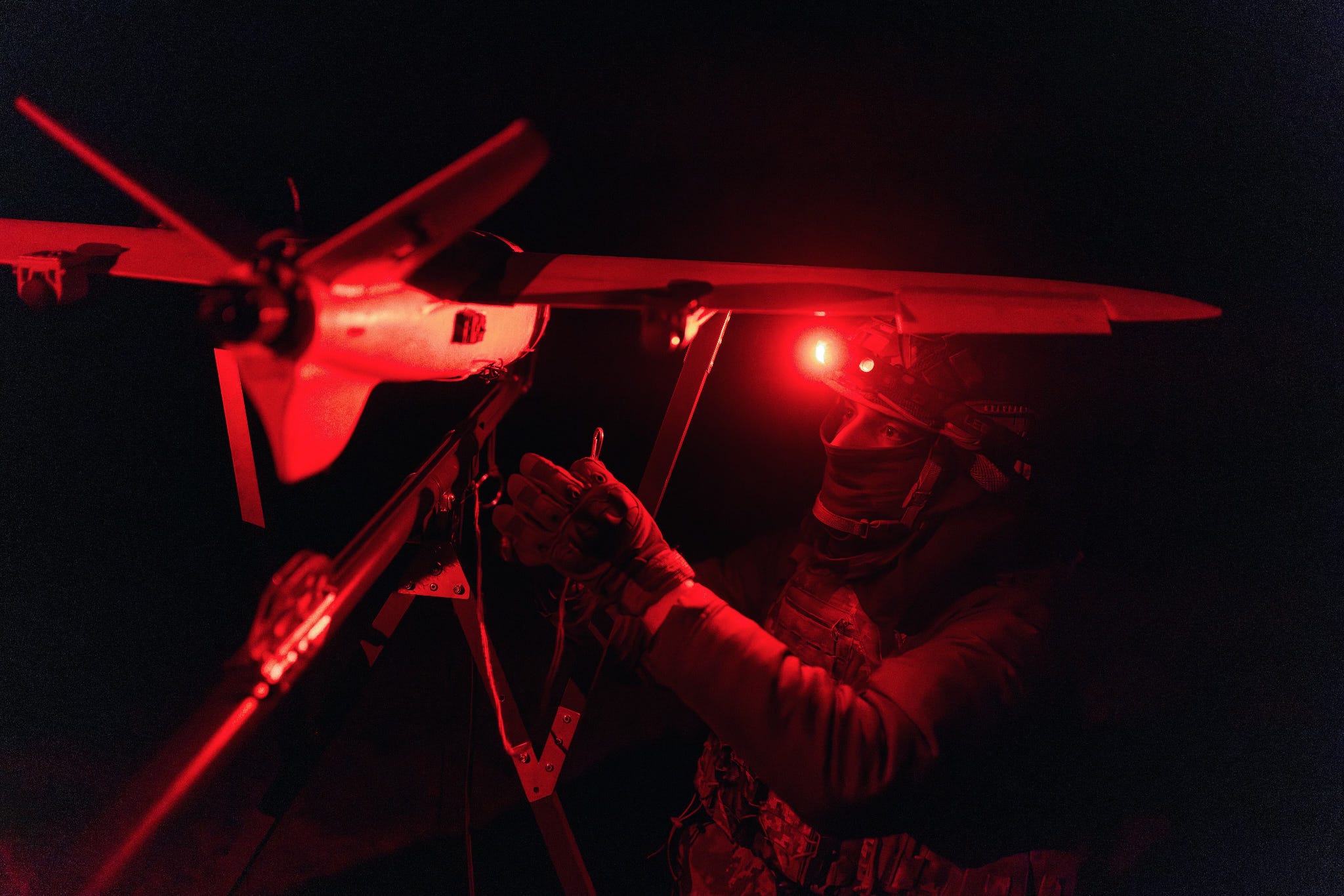
The Russia-Ukraine War has become synonymous with drone warfare. Online, any mention of the Ukraine War will bring on an onslaught of comments around how cheap and easy-to-use drones have forever changed the nature of war. Regardless of whether the fundamentals of warfare have been changed by innovations in drones, a new skill set that is in high demand is being forged in the crucible of Ukraine’s east. In particular, skilled drone operators are in high demand, increasingly in the criminal underworld.
Both the Ukrainian and Russian militaries have trained thousands of drone operators, who have then gone on and become seasoned combat drone pilots. However, this is not just a story of soldiers serving their countries. With both Ukraine and Russia accepting foreign volunteers, there are now numerous trained, experienced drone operators who have left military service and gone on to lives outside of the conflict zone. Some of these combat veterans have chosen to use their skills in the service of criminal organizations. Yet others were originally sent to the front by criminal organizations in the first place, in order to gain the desired skills.

The combat drone operator skillset is in high demand with nonstate militant organizations, ranging from rebel groups to criminal syndicates. There is an increasing number of nonstate militant organizations that are using drones in attacks against both agents of the state as well as opposing nonstate actors. These organizations include the Marxist-Leninist National Liberation Army (ELN) in Colombia, the Jalisco New Generation Cartel (CJNG) in Mexico, and Chinland Defense Force rebel group in Myanmar, among others. Analysts are paying attention to the growing nonstate use of combat drones because of the asymmetric impacts that effective combat drone use can have on both states and other nonstate actors. As the nonstate use of combat drones increases, the market for skilled and seasoned drone operators will also continue to expand.
The Foreign Volunteer Pipeline
The Ukraine War has already attracted thousands of foreign fighters to both sides. Early in 2022, the Armed Forces of Ukraine (AFU) stood up its International Legion specifically to provide foreign volunteers an easy onramp to service in the Ukrainian military and attract more volunteers in the future. While the Ukrainian government does not release official figures, it is likely that at least 15,000 foreign fighters have served with the AFU. For the Russians, at least 27,000 foreign fighters have served in the Russian military in Ukraine since the start of the full-scale war, with the Russian government seeking to recruit an additional 18,500 foreigners to serve in 2026 alone.
In both the Ukrainian and Russian militaries, foreign fighters fill a number of roles, including many that have nothing to do with drone operation. However, with drones having become such a significant part of the order of battle in both countries’ militaries, a substantial number of the foreign fighters do become drone operators. In 2025 alone, Ukraine trained over 50,000 drone operators, and that same year, Russia had at least 80,000 soldiers serving in drone units.
In this hothouse of drone innovation, both technological and tactical, criminal and rebel groups have seen the opportunity to increase their capabilities by either sending existing members to serve in the Ukrainian or Russian militaries, recruiting returned fighters into their organizations, or otherwise to purchase the services of returned fighters on a mercenary basis. Currently, criminal organizations are pursuing all three paths of bringing skilled drone operators into their organizations, but some notable examples of criminal organizations sending existing members to Ukraine to gain desired skills include a Mexican national with likely connections to the Zetas crime syndicate and at least three former Revolutionary Armed Forces of Colombia (FARC) fighters, all of whom were rooted out of the AFU by the Security Service of Ukraine (SBU).
Ukraine War Veterans Bring Critical Skills to Criminal Organizations
Veterans of the Ukraine War can bring critical skills to criminal organizations. Effective drone operators are time-intensive and expensive to train, and bringing this knowledge in-house at an accelerated rate via previously trained and seasoned personnel is a high priority for criminal organizations, especially in Latin America. Some particular use cases that drug cartels in Latin America are interested in using drones for include smuggling narcotics across the US-Mexico border, conducting reconnaissance, and attacking rivals.

The skills and knowledge that these war veterans bring include piloting skills, munition payloads, electronic warfare, drone countermeasures, and tactics. A typical introductory drone course has pilots undergoing five weeks of flight training before they’re ready to be sent to the front for further on-the-job training. It is at the front that pilots become truly skilled, accruing hundreds or thousands of flight hours in order to gain proficiency. However, beyond piloting, effective combat use of drones requires additional knowledge, including how to arm them for attack missions. Most armed drones in Ukraine are still using improvised payloads that require craft-modifying munitions using existing munitions such as mortar rounds and rocket-propelled grenades (RPG), a dangerous process where existing munitions are stripped and fuzed in the field. Further knowledge of radio theory, frequencies, and repeaters is critical for operating in environments with hostile electronic warfare and geographies that prevent simple line-of-sight flight. Finally, effectively using drones in combat requires distributed teams where the drone pilot is only a single actor in a larger mission, whether it’s reconnaissance, attack, or logistics, and the knowledge of how to conduct these operations, including what organization to use, is critical for mission success. Already, drones are being used extensively in various parts of Latin America, including for offensive drone attacks, including both FPV and dropper style attacks.
A Ticking Time-Bomb
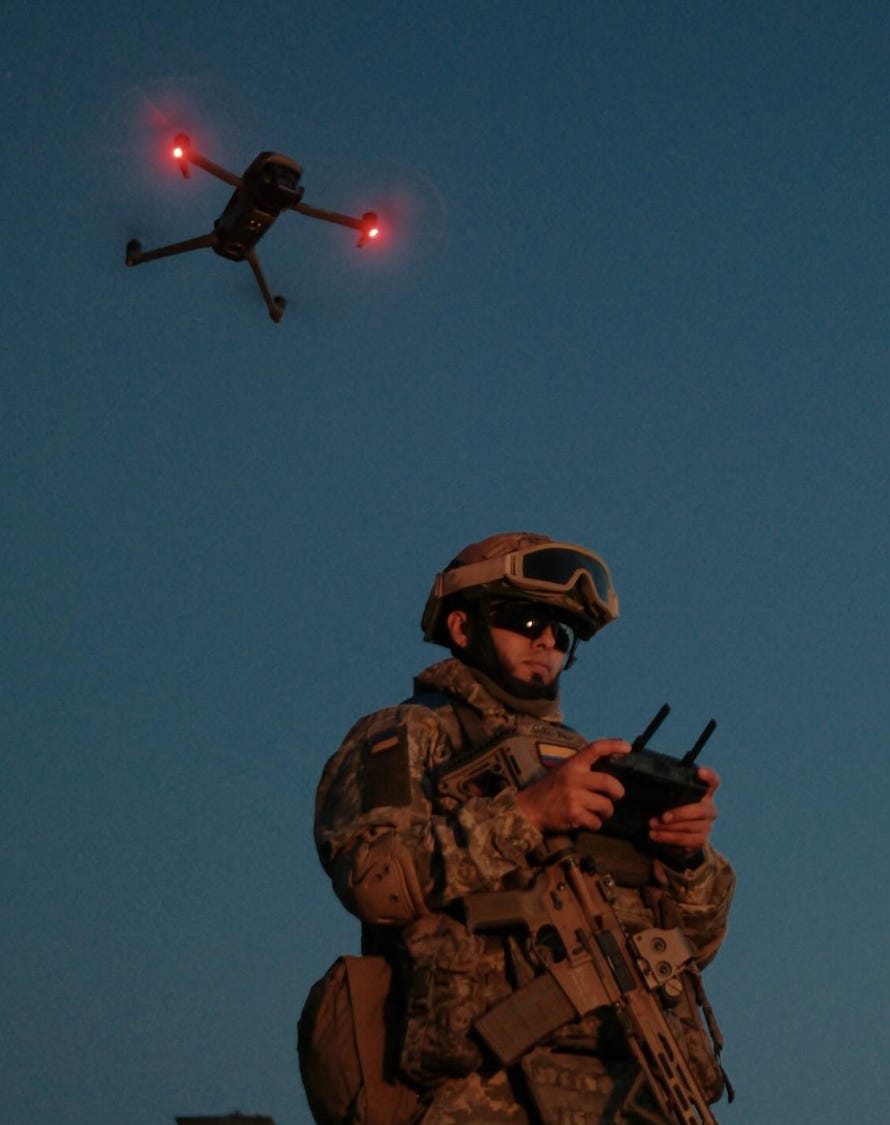
It is not currently known how widespread the problem is, but with the Ukraine War showing no signs of stopping, there is the very real possibility that the flow of skilled drone operators from the frontlines in Eastern Europe to the black market will continue. Thousands of Latin Americans have already fought on Ukraine’s frontlines. While many have done so honorably, active gang members, cartel sicarios, and want-to-be mercenaries are among those who have fought. As ever-increasing numbers of combat drone operators return from the frontlines of Ukraine, criminal organizations will have an increasing number of potential recruits to select from. Importantly, governments, especially those south of the US-Mexico border, are not prepared to counter the growing drone threat. With this threat in mind, governments may soon begin following returning Ukraine War veterans, especially those with drone combat skills, more closely.
 | A guest post by
|