

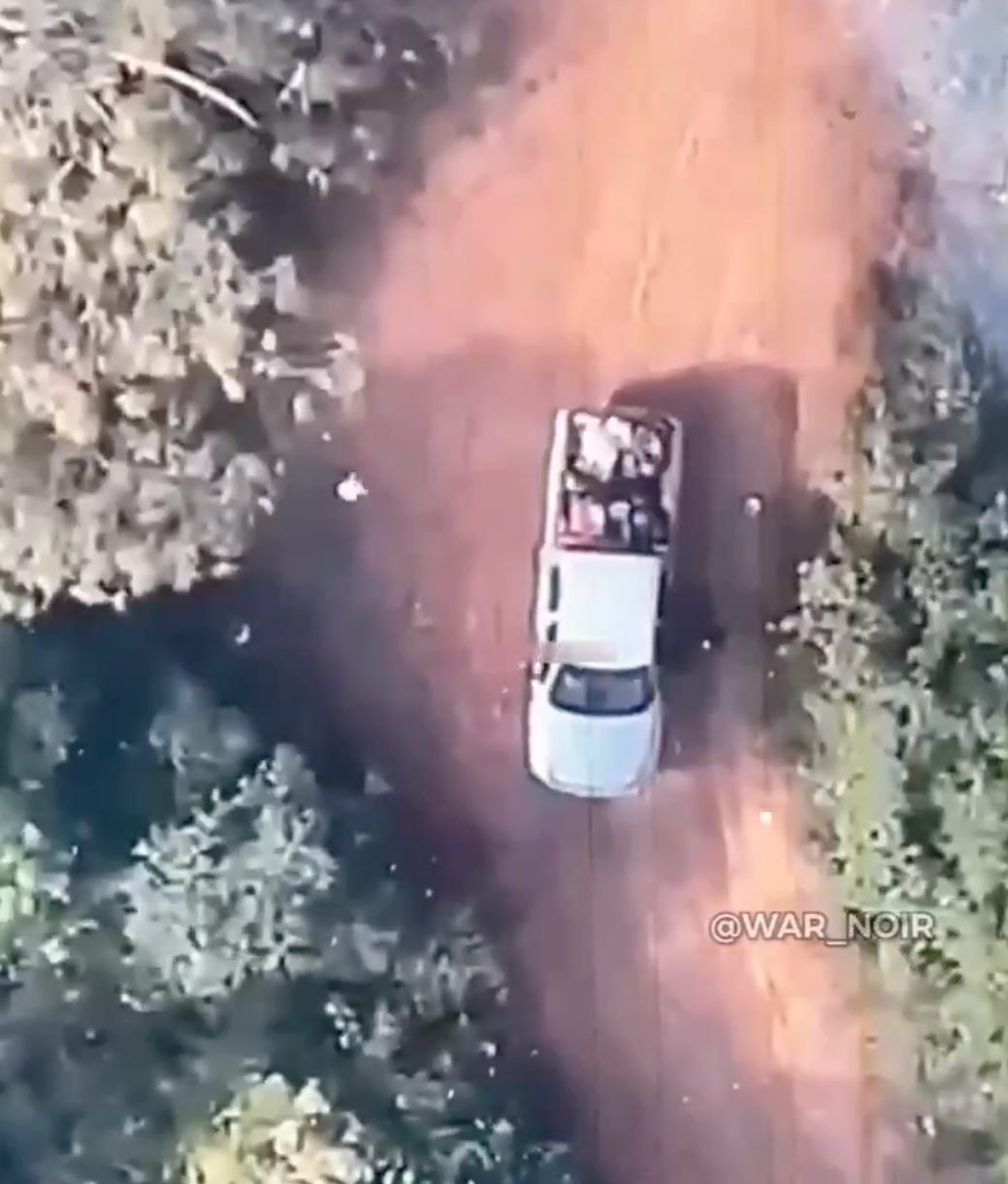
The bomb begins falling from the left side of the screen as soon as the video starts. The viewer has the perspective of the drone as it looks down at a white pickup truck with a full bed; men standing on the driver’s side of the vehicle appear to be talking, while the bombs gets smaller and smaller before impacting the bed of the truck and detonating. The men on the driver’s side flee as a man in the front passenger seat exits the vehicle and joins his comrades in flight. This is a short video released by the Mexican drug cartel Cárteles Unidos, showing an attack on the Jalisco New Generation Cartel (CJNG). This video, published by the pseudonymous conflict researcher War Noir in August of 2025, provides a glimpse into the emerging, but increasingly complex world of drone use by drug cartels.

Globally, drones have begun emerging in conflict zones around the world, to the point where they are being used, with varying degrees of effect, in every major and most minor, armed conflicts. This includes the use of drones by drug cartels and other transnational criminal organizations (TCOs) across Latin America. While drug cartels and other TCOs have been using drones in various capacities for several years now, innovations in drone technology and tactics have begun to filter out of the warzone in Ukraine and subsequently appearing in Latin America.
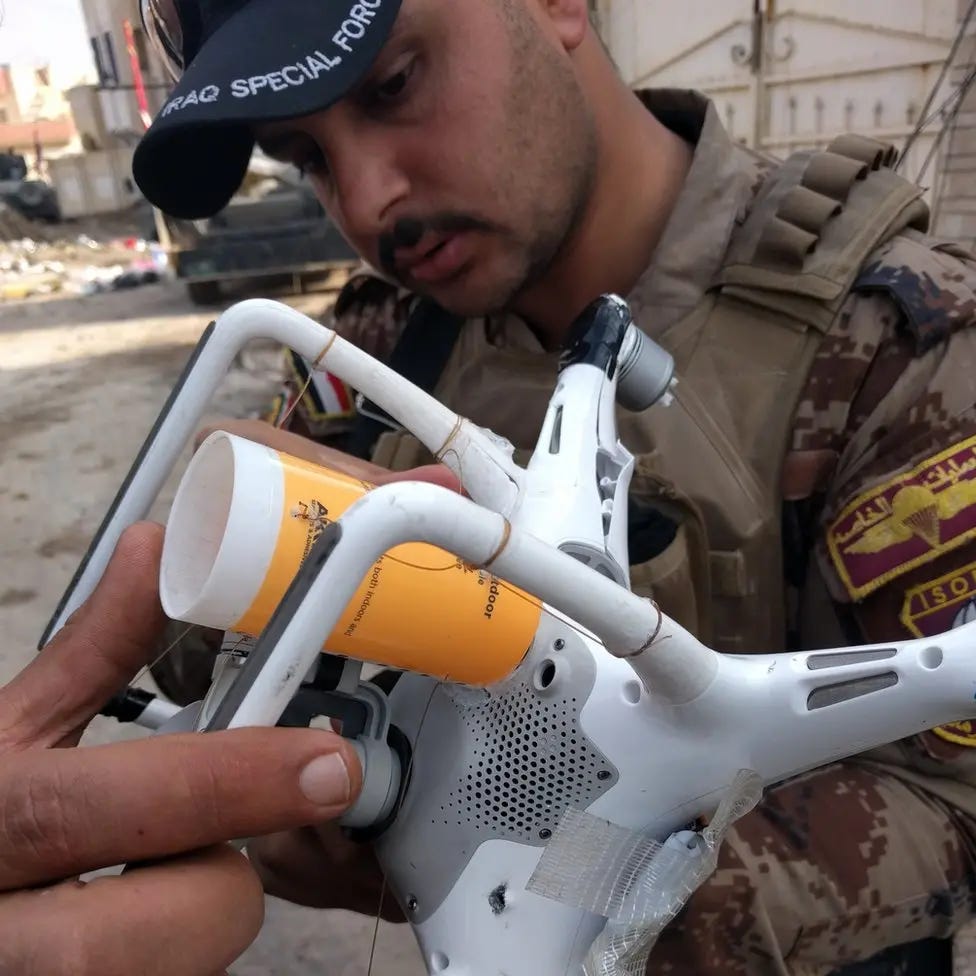
Commercial off-the-shelf (COTS) drones have dramatically reshaped how militant organizations globally fight, and cartels and TCOs are no exception. The introduction of relatively cheap, accessible, and easy to fly drones began in January 2013 with the release of the DJI Phantom. The Phantom was the world’s first ready to fly drone that met a low enough price point to reach mass adoption. Quickly, the terrorist group calling itself the Islamic State (IS) began using small, cheap, commercial off-the-shelf (COTS) hobby drones in operations, with this first being documented in 2014, and by no later than 2016 when IS had begun to weaponize them. Weaponization of COTS drones was, and still often is, rudimentary. Especially early on, weaponization focused on grenade dropper type systems, where hand grenades or launcher grenades were dropped from modified COTS drones. These early grenade dropper systems often relied on placing munitions inside of a plastic cup on the bottom of the drone, with the grenade being dropped with an improvised release mechanism.
Since the early days of improvised drones being used by IS, drone warfare has taken substantial leaps — n particular, on the battlefields of Ukraine. For drones, the biggest innovation to come out of the war in Ukraine is the weaponized first-person-view (FPV) drone. Similar to how DJI’s introduction of the Phantom brought the camera drone to the world, FPV drones began to emerge as a COTS technology in 2013 to 2014. The technology was firmly on the global stage with the founding of the Drone Racing League (DRL) in 2015. However, these drones didn’t see substantial mass weaponization until after the full-scale Russian invasion of Ukraine in early 2022. It was not until later in 2022, with mass adoption finally occurring in 2023, that weaponized FPV drones finally began to appear on the battlefield in the now familiar “kamikaze” one-way-attack (OWA) format. The introduction of COTS drones to warzones also invited the introduction of a slew of complementary tools and countermeasures, anging from ground control stations to jammers and spectrum analyzers. Drones have helped usher in a new era of electronic warfare in conjunction with the introduction of cheap air forces.
The most common use of weaponized drones by cartels and TCOs is the grenade dropper. DJI Mavic drones are the most common type of drone that is used in grenade-dropping attacks. This is because of the Mavic’s ubiquity, low cost, and ability to produce enough power in order to carry small payloads. While early IS grenade-dropping drones used improvised dropper systems, today’s purpose-built after-market dropper mechanisms are often advertised on social media sites like Instagram, though often labeled as “water bottle droppers,” and are for sale on sites like Etsy. Grenade dropping attacks may involve actual hand or launcher grenades, or other professionally produced munitions such as mortar rounds, but very often use improvised explosive devices (IEDs). Ultimately, whether a cartel or TCO is using standard or modified factory built grenades of one kind or another, or using IEDs — this likely has to do with a group’s ability to easily obtain munitions or not. Recently, a dropper-style attack was conducted by the Gulf Cartel (CDG) on the house of the mother of the notorious drug kingpin El Chapo Guzman.

While dropper-type drones are seen with some degree of frequency in Latin America, FPV-style attacks are seen much less often. This is because FPV-style attack drones are a much more difficult technology to field effectively. FPV drones typically do not have fly-by-wire software like camera drones do, and therefore are much more difficult to fly. Forums and blogs for new FPV drone enthusiasts often recommend using FPV drone simulator games like Liftoff or Uncrashed for 20-30 hours of gameplay prior to attempting to fly a real FPV drone. This sharp learning curve is just the first major obstacle that cartels and TCOs face when attempting to adopt FPV style drones for attacks. Fuzing, or the technology and components needed to make munitions safe or armed and to detonate the explosives at the right moment, is the next big obstacle. In particular, the most common detonator mechanism for OWA FPV drones in Ukraine is a set of contact wires that cause the munition attached to the drone to explode when the drone impacts a target. Additionally, in Ukraine, OWA FPV drones are often armed with modified mortar rounds. While the available munitions fuzing technology has improved, many FPV drones have still not moved beyond the most primitive types of detonators, and fundamentally, these munitions are extremely dangerous to the individual making them. However, despite the higher degree of skill required to fly them and the greater danger involved in producing an effective munition for arming them, OWA FPV drones are still being used in Latin America. In particular, in August 2025, forces aligned with the Revolutionary Armed Forces of Colombia (FARC) shot down a Columbian Army UH-60 Blackhawk helicopter.

Cartels also use drones for more “mundane” activities such as reconnaissance and smuggling. For 2025, U.S. Customs and Border Protection detected 34,682 drone flights within 500 meters of the U.S.-Mexico border. While some portion of those flights were benign hobbyists or related to some form of legitimate work, many were likely being done in the furtherance of cartel objectives. These objectives could include conducting reconnaissance for illegal border crossings or smuggling contraband across the border. Additionally, drones are being used to smuggle contraband into prisons in Latin America as well as the United States. Notably, in February of 2026, the US Federal Aviation Administration initially shut down air space overEl Paso, Texas because of issues surrounding cartel drone use and the US military’s plans to use a new laser weapon as a countermeasure against those drones.
In particular, the Mexican drug cartel CJNG has been a prolific user of drones in operations in Mexico. CJNG frequently uses drones to conduct reconnaissance operations as well as to strike their opponents, most often other cartels. The Jalisco-based cartel was an early adopter of COTS drone technology, and has been highlighted for being a leading adopter of other innovative technologies as well. Notably, CJNG has been running at least one specialized drone unit since 2023, though possibly since as early as late 2021. This drone unit was responsible for approximately 20 percent of all drone attacks in Mexico from 2021 to 2025. Additionally, CJNG may be starting to adopt OWA FPV drones for attacks, with possible evidence of the adoption of such systems being documented in August 2025.


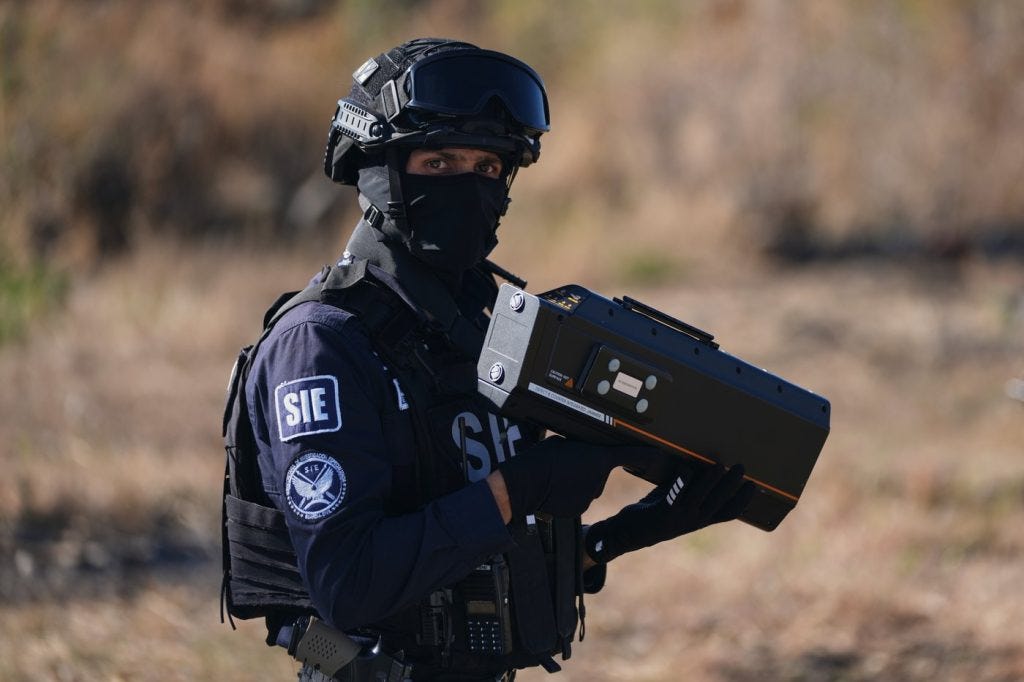
While the adoption of drone technology does not fundamentally change the conflict between state forces and drug cartels or TCOs, it does create additional layers of danger for police forces, as well as accelerating the ever expanding need for more resources to combat cartels. With cartels using larger and larger numbers of drones, state security forces will be forced to purchase sophisticated electronic warfare technologies that are able to locate, track, and defend against drones, as well as hire and train personnel who are able to operate that technology.
