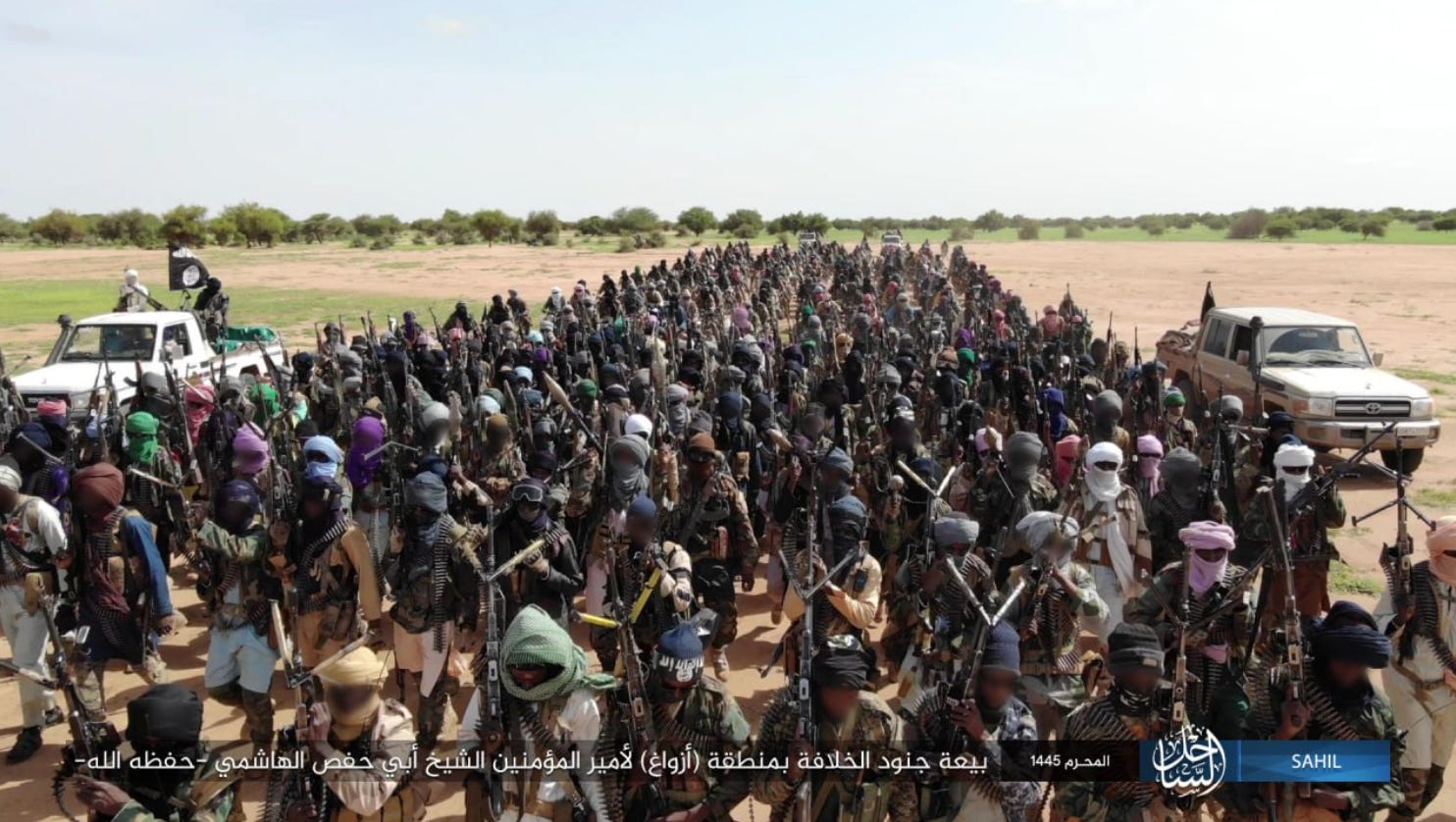
Islamic State–Sahel (IS‑Sahel) has been building out a support corridor that runs from its core zones in the Sahel through northern Morocco into Spain, using small, compartmented structures to cover recruitment, financing, logistics, and external operations (ExOps). This corridor leverages long‑standing smuggling and migration routes as well as dense human and commercial linkages across the Strait of Gibraltar, allowing African IS branches to plug into European spaces with relatively low visibility. IS‑Sahel uses trans‑Saharan trade and criminal infrastructures to support its operations, extending these existing networks into the Western Mediterranean. Recent Islamic State propaganda has explicitly encouraged attacks in North Africa, with a recent editorial in the group’s Arabic‑language weekly al‑Naba calling for operations targeting Morocco and Tunisia as part of a broader campaign to punish states cooperating with Western counterterrorism efforts. This messaging underscores that the Morocco–Spain corridor is embedded in a wider IS strategy that links Sahel battlefields to strike options on both sides of the Mediterranean.
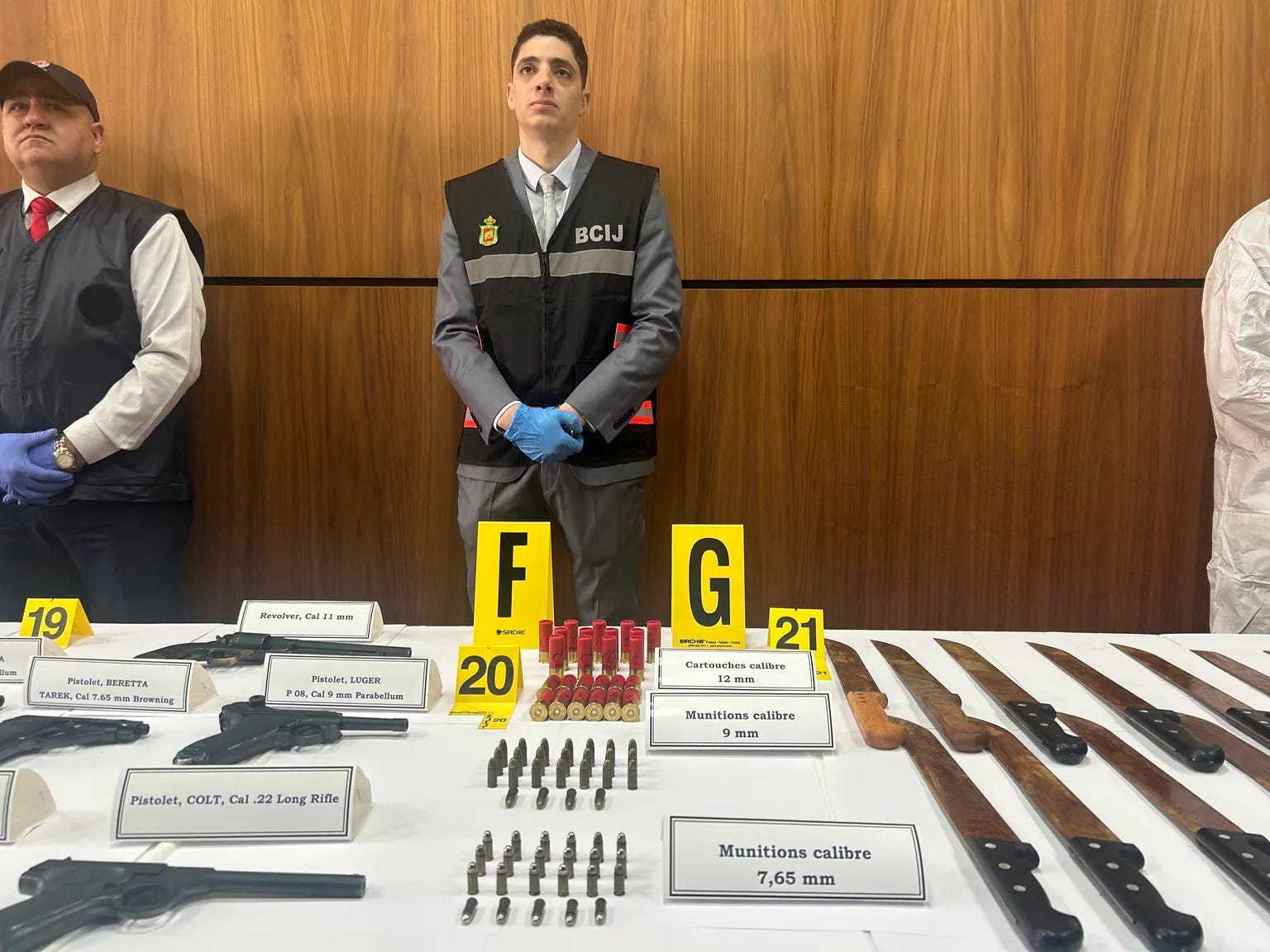
This dynamic was on full display on July 6, 2026, when Morocco’s Central Bureau for Judicial Investigations (BCIJ) announced it had thwarted a plot by a cell loyal to Islamic State’s Sahel branch to strike sensitive sites and security targets inside the kingdom. Coordinated raids across seven cities, Agadir, Taroudant, Casablanca, Hajeb, Tetouan, Fqih Ben Salah, and Safi, led to the arrest of ten suspects who investigators say had sworn allegiance to Islamic State and were taking direct guidance from its Sahel branch. Searches turned up bladed weapons, military-style uniforms, bomb-making instructions, digital files, and chemical precursors, along with a vehicle that had been altered and was believed to be earmarked for a suicide bombing or ramming attack. A separate warehouse yielded butane canisters and pressure cookers, some packed with nails and wired for detonation. BCIJ figures put the number of Moroccans recruited by IS’s African branches in recent years at more than 130, and since the bureau’s founding in 2015, it has broken up dozens of militant cells and detained upward of 1,000 suspected jihadists, though the country’s most recent successful attack dates to 2023, when IS loyalists killed a police officer in Casablanca.


IS‑Sahel and associated IS elements are increasingly using the Morocco–Spain axis, particularly the Tangier–Strait of Gibraltar–Balearic Islands line, as a functional corridor rather than an occasional transit path, integrating financial, logistical, and operational roles across both shores. The March 2026 Morocco–Spain operation that dismantled a three-man cell distributed between Tangier in Morocco and Palma de Mallorca in Spain reveals a more mature architecture — rear area support activities in Morocco directly servicing an attack-planning node inside Spain. The cell’s reported support to IS fighters in both the Sahel and Somalia signals growing convergence between African IS “provinces,” with the Western Mediterranean emerging as a shared support basin. While sustained Spain–Morocco cooperation has driven down the size and sophistication of networks since the mid-2010s, permissive structural factors such as geography, diaspora ties, mixed licit and illicit trade, and ubiquitous online radical content ensure that IS‑Sahel‑linked activity will remain resilient and adaptive. Since at least 2014, Moroccan security forces have dismantled dozens of IS‑linked cells that pledged allegiance to the group and were allegedly in the early stages of planning attacks on public buildings, tourist sites, officials, and security forces — demonstrating both the scale of the threat and the capacity of these networks to strike foreign and Western targets inside Morocco and, if left unchecked, across the wider region.
March 2026: The Tangier–Mallorca Cell
In late March 2026, Moroccan and Spanish security services jointly dismantled a small IS‑aligned jihadist cell spanning Tangier and Palma de Mallorca. Two members were arrested in Tangier, while the alleged ringleader was detained in Palma in a coordinated operation involving Morocco’s General Directorate for Territorial Surveillance (DGST) and Spain’s Policía Nacional. Open reporting describes this as a dangerous jihadist cell with clear IS allegiance and a unified operational concept despite its geographic dispersion. The Tangier‑based suspects are reported to have specialized in providing financing and logistical support to IS fighters in the Sahel, Somalia, and other zones south of the Sahara, while the Mallorca‑based member combined intensive online IS propaganda consumption with concrete attack planning in Spain using methods inspired by “individual terrorism.” The case shows that a single, compact network can simultaneously fund African IS branches and prepare a lone actor-style operation in Spain, illustrating how IS‑Sahel and IS‑Somalia are now plugged into the Iberian theater through Morocco.
February 2025: “Lions of the Caliphate” Cell in Morocco
In February 2025, Morocco’s Bureau Central d’Investigation Judiciaire (BCIJ) announced the dismantling of a roughly 12-man network spread across nine cities —including Casablanca, Fez, Tangier, and Errachidia —that it said was operating on behalf of Islamic State’s Sahel Province. Moroccan officials described the group, which referred to itself as the “Lions of the Caliphate in the Maghreb,” as an external project of IS‑Sahel leadership designed to establish a durable operational wing in Morocco. Raids uncovered a concealed rear base in mountainous terrain near the Algerian border stocked with weapons, explosive components, and training material. Authorities said the network was preparing remotely detonated bomb attacks on Moroccan targets under direct guidance from IS‑Sahel commanders. The head of BCIJ, Cherkaoui Habboub, publicly argued that the case showed IS‑Sahel seeking both to entrench itself inside Morocco and to draw Moroccan recruits into Sahel and Somali battlefields, noting that the group “does not hide its desire to target Morocco” in its propaganda.