
New Spain-Morocco Plot Signals Islamic State Somalia’s Internationalization and Threat to the West

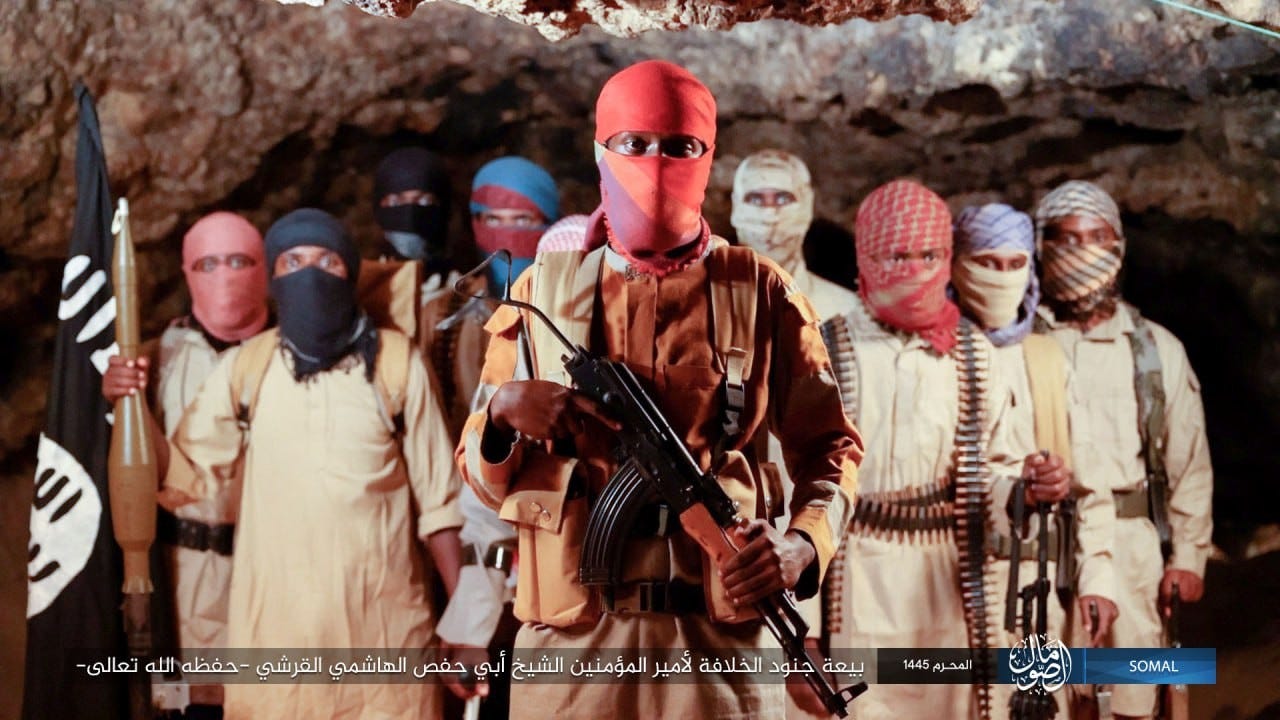
On March 25, 2026, Morocco dismantled an Islamic State (IS)‑affiliated cell operating across its northern cities and Spain — an operation that offers a concrete glimpse of how Islamic State Somalia (IS‑S) is becoming embedded in a wider ecosystem of transnational support structures that stretch from East Africa to Europe. While the underlying case centers on a joint Moroccan-Spanish operation led by Morocco’s Central Bureau of Judicial Investigations and Spanish security services, it also illustrates the kind of recruitment, online indoctrination, and travel facilitation pipelines that IS‑S increasingly seeks to exploit as it internationalizes and looks beyond its Puntland strongholds towards North African and European networks. In this sense, the March 2026 Morocco-Spain cell can be read as part of the broader architecture through which IS‑S content circulates into diaspora communities, sympathizers seek to move toward active combat zones, and intermediaries help connect would‑be recruits to Islamic State nodes abroad, including in Somalia.
Viewed through the lens of IS‑S’s evolution, the activities described in this case underscore three overlapping threat vectors: external operations, guided plots, and inspired attacks. External operations become more plausible as cells in Morocco and Spain develop the capability to channel money, recruits, or operational information to and from hubs like IS‑S, effectively serving as forward extensions of a Somalia-centered command and facilitation system. Guided plots are enabled when individuals in such cells receive direction, encouragement, or technical input from actors linked to IS‑S, whether on target selection, timing, or attack methods, turning local networks into instruments of a geographically distant leadership. Finally, the focus on propaganda, online radicalization, and recruitment highlights the enduring risk of inspired attacks, in which self‑radicalized supporters in Morocco, Spain, or elsewhere in Europe consume IS‑S branded or aligned content and then act on its calls to violence without direct tasking, making the March 2026 Moroccan-Spanish case a warning sign of how IS‑S’s growing reach into European spaces can translate into diverse and hard-to-predict attack scenarios. Examining this case also serves as an entry point to have a closer examination of how IS‑S itself emerged and evolved into a pivotal node within the global Islamic State movement.
IS-S has evolved from a small splinter group in Puntland into one of the most strategically important components of the international Islamic State organization and global movement, but this rise now coincides with heavy military pressure and battlefield losses. Since late 2024, a large-scale Puntland campaign, often referred to as Operation Hilaac and backed by U.S. airpower and other international support, has overrun key strongholds in the Cal Miskaad and Al Miskad mountains, killed hundreds of fighters including many foreigners, captured senior commanders, and reduced IS‑S’s territorial presence in Bari region by well over half according to Puntland officials, forcing surviving cadres into scattered hideouts and stressing the group’s command and control and recruitment pipelines. Yet even as a heavily degraded IS‑S absorbs these losses on the ground, it continues to operate as a regional and transnational command, financial, and propaganda hub with a history of international recruitment, overseas facilitation, and plots, and this combination of attrition at home and persistence in its transnational functions underpins its emerging role as a concrete external operations threat, particularly to Europe and North America.
Historical Background on IS-S’s Internationalization
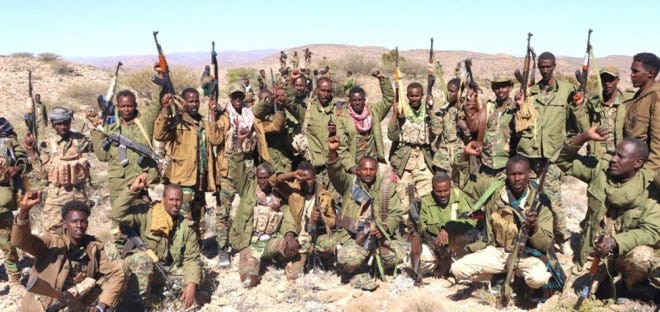
IS‑S emerged in October 2015 when Abdulqadir Mumin defected from al-Shabaab with roughly thirty fighters in Puntland and pledged allegiance to the Islamic State’s central leadership. Initially a marginal faction, its prominence rose after it briefly captured the port town of Qandala in 2016 and was recognized as a province in 2017. It consolidated two main operational zones: mountain strongholds in Puntland’s Al Madow range and urban cells in Mogadishu, from which it has conducted dozens of attacks annually against Somali security forces, Puntland units, AU missions, and government officials. Despite a modest manpower estimate of 500 to 700 fighters, IS‑S’s strategic importance has grown disproportionately to its size because it increasingly functions as a regional hub for coordination, finance, and transnational recruitment.
This transformation centers on the Al Karrar regional office, established in northern Somalia by late 2018 under Mumin’s leadership. Al Karrar acts as a combined command and financial center responsible for Islamic State activity across eastern, central, and southern Africa, including Islamic State Central Africa Province in the Democratic Republic of Congo and the Mozambique Province. United States and United Nations reporting now describe Al Karrar as one of the movement’s most important leadership and revenue generation structures worldwide, with some assessments suggesting that Mumin may hold a broader global role beyond Somalia.