
Two Years After Crocus City Hall, Moscow’s Latest Terrorist Attack Shows IS Remains a Threat

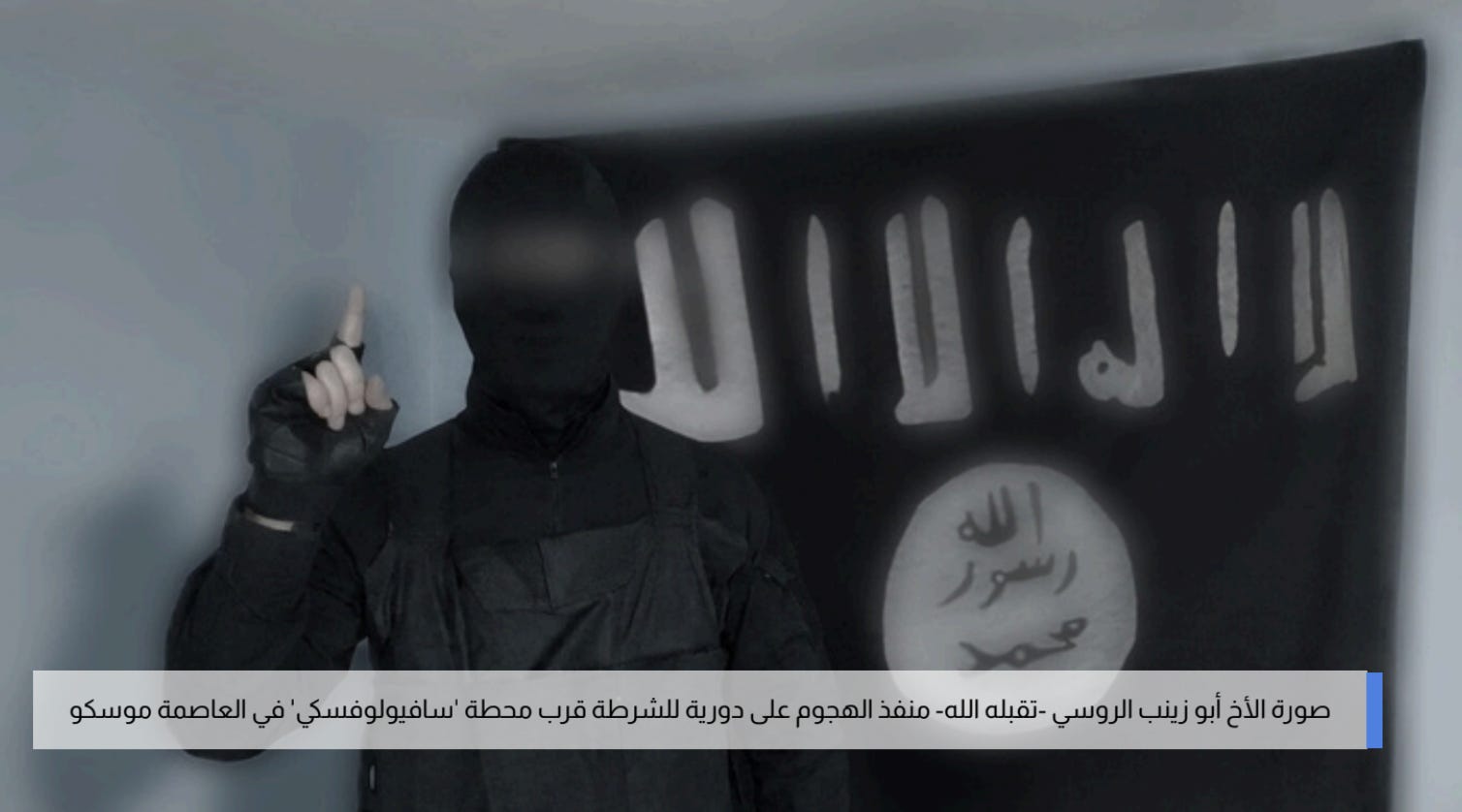
While organizational terrorist networks in Russia have degraded, attack plots continue to stem from individual supporters, munasir foundations, and unofficial groups adapted to the new multi-spatial security environment.
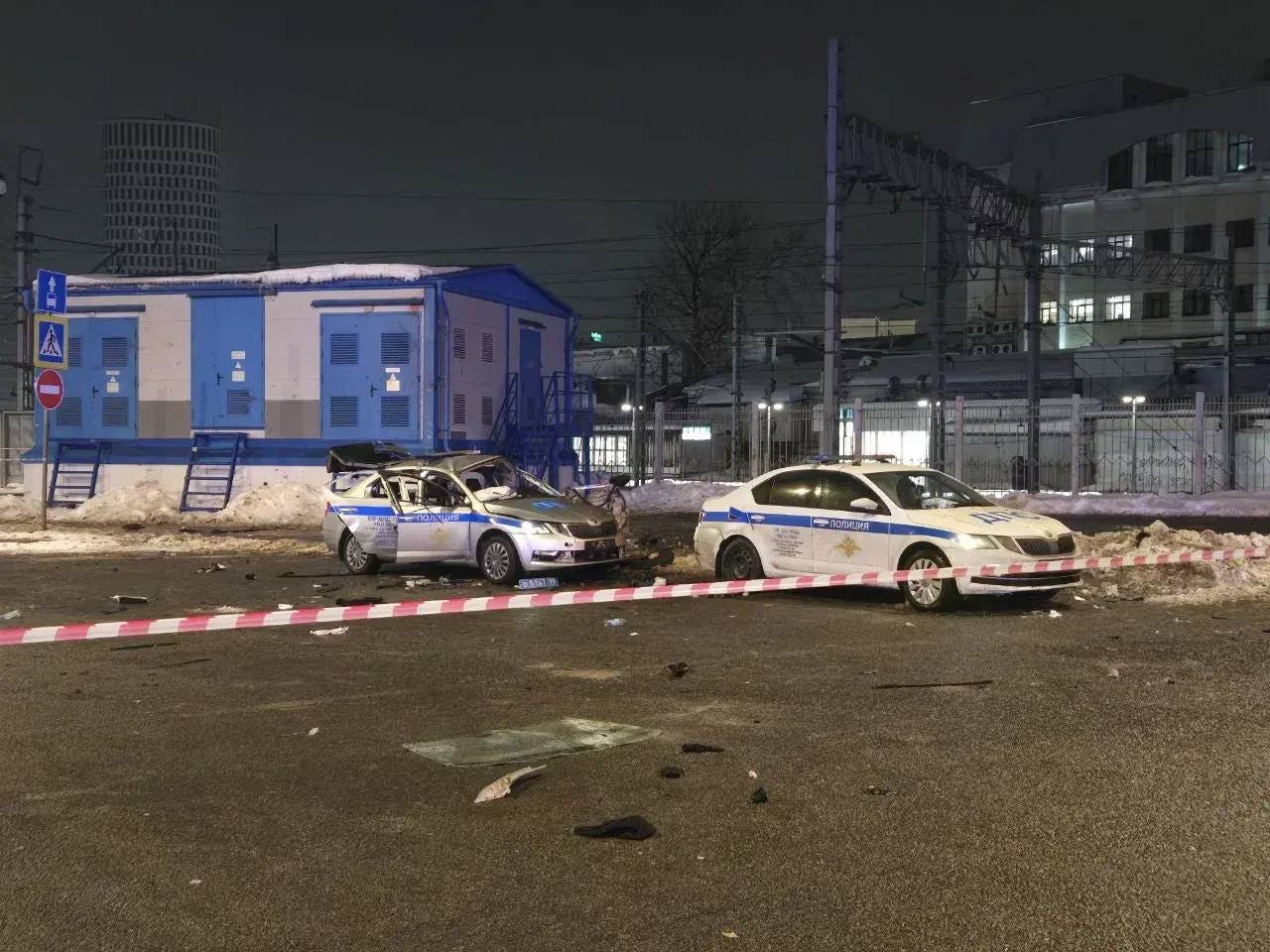
An explosion punctured the silence of an early morning in Moscow on February 24 this year, killing one policeman and injuring two more. In a country fixated on its invasion of Ukraine, the bombing was a reminder that not even two years after the attack on Crocus City Hall, Islamic State’s supporters continue to pose a threat.
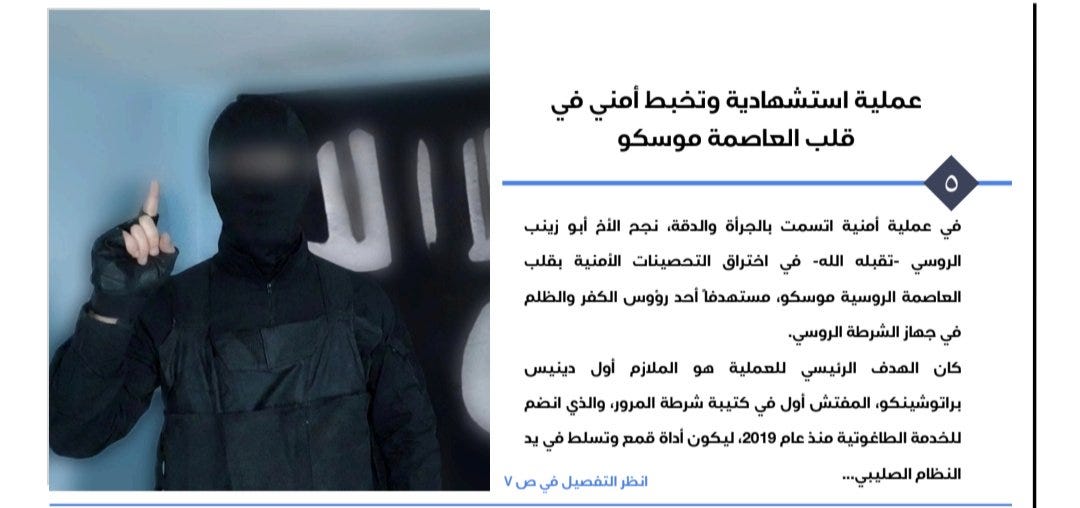
The attack was not claimed by Islamic State’s Amaq Agency, but rather by a pro-IS foundation based in the North Caucasus: Nabd al-Salaf al-Qawqazi (NSQ). The munasir (meaning: volunteer) organization claimed the bombing in its periodical The White One from Grozny. This was the first claim of attack responsibility ever made by the group.
Russian media reported that the Moscow police attacker was a 22-year-old native of the Udmurtia Republic. This is an odd profile for IS supporters in Russia, as Udmurt does not have a large Muslim population — this additionally suggests that Russia should move away from its biased investigative profile to focus more on actual supporters, rather than general ethnic groups. Traffic police, however, are a standard target for various armed actors in Russia, due to their characteristically being both more exposed and less armored than other security services.
 | A guest post by
|