

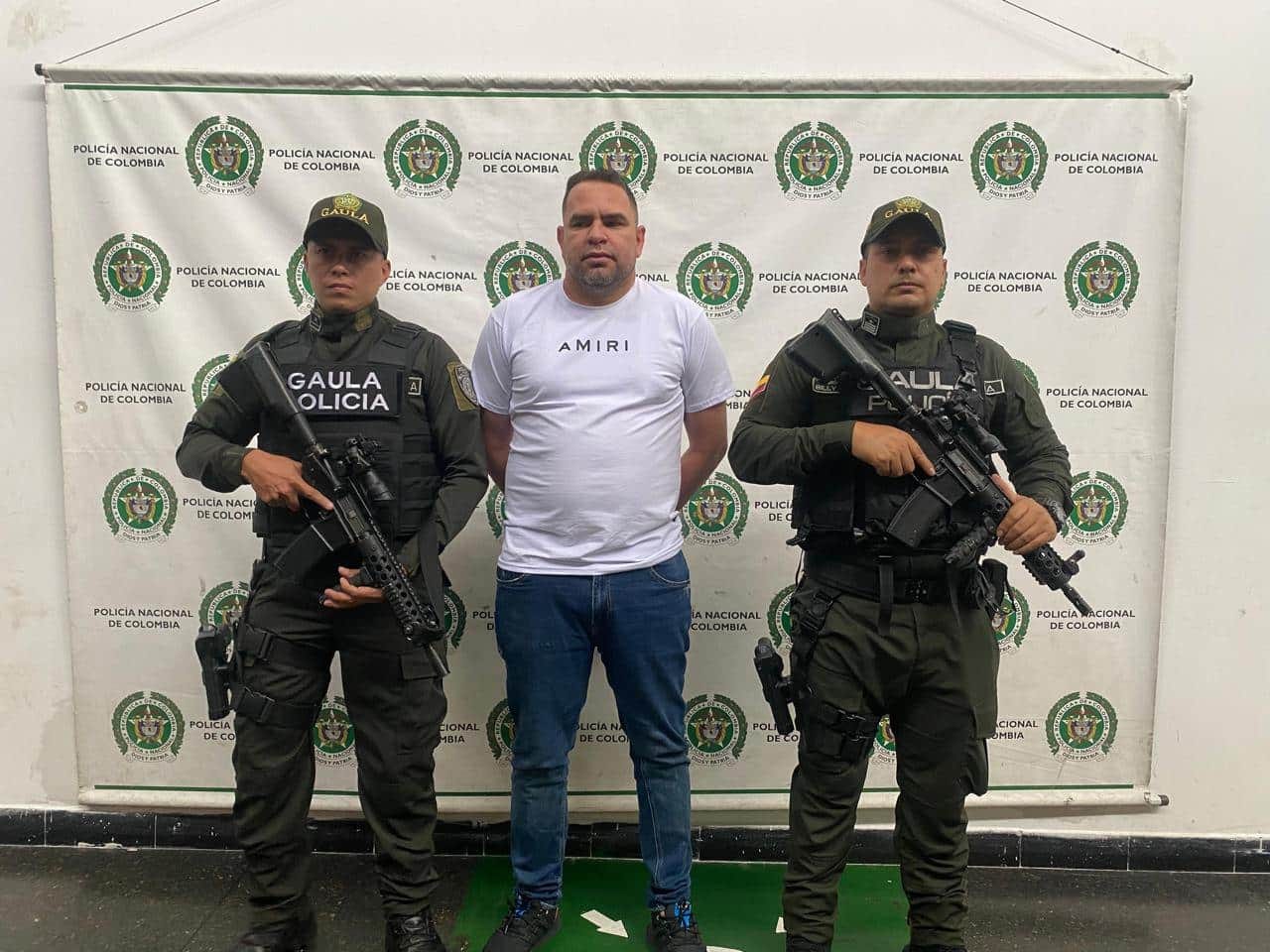
On January 3, during a U.S. military operation in Caracas supported by the Department of Justice and the Central Intelligence Agency (CIA), Nicolás Maduro and his wife, First Lady Cilia Flores, were captured and transferred to the United States. Maduro was taken into federal custody in New York and is currently held at the Metropolitan Detention Center in Brooklyn. Both have pleaded not guilty.
U.S. prosecutors allege that Maduro, Flores, their son Nicolás Ernesto Maduro Guerra, and several senior officials led a long-running cocaine-trafficking conspiracy, collaborating with drug cartels designated as terrorist organizations. According to the indictment, the group abused positions of public trust and corrupted state institutions to move tons of cocaine into the United States as part of what authorities describe as a “narcoterrorism” operation.
The 25-page indictment filed in the Southern District of New York claims the scheme began in 1999, when Maduro entered public office, and involved systematic drug trafficking, violence, and intimidation.
Prosecutors allege Flores accepted hundreds of thousands of dollars in bribes in exchange for facilitating drug shipments and that the couple used state-backed gangs to enforce their operation through kidnappings, beatings, and killings.
Maduro’s son is accused of transporting drug shipments via military flights to Margarita Island and of helping arrange large-scale cocaine shipments to Miami and New York, including discussions about routing lower-quality cocaine to New York and concealing drugs in cargo and scrap-metal containers.
Also charged are current and former interior ministers Diosdado Cabello Rondón and Ramón Rodríguez Chacín. Cabello is accused of coordinating cocaine shipments with Colombian traffickers bound for Mexico and the U.S., while Rodríguez Chacín allegedly sheltered FARC operatives and accepted bribes to protect them.
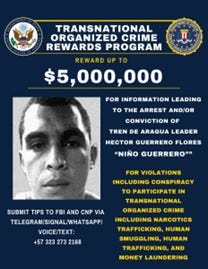
All defendants are accused of having partnered with narco-terrorist organizations, including Colombia’s Revolutionary Armed Forces of Colombia (FARC), the National Liberation Army (ELN), Mexico’s Sinaloa Cartel and Los Zetas, as well as the Venezuelan criminal group Tren de Aragua (TdA). The indictment also names TdA’s leader, Héctor Rusthenford Guerrero Flores, also known as “Niño Guerrero,” as a co-conspirator. Tren de Aragua is the only Venezuelan criminal organization explicitly cited in the document, underscoring its central role in the narcotics trafficking network.
Since September 2025, President Donald Trump’s administration has struck more than 45 boats found sailing near the shores of Venezuela, with Defense Secretary Pete Hegseth accusing them of smuggling drugs and committing acts of narco-terrorism.
Besides accusations that Venezuela President Nicolas Maduro and his regime are narco-terrorists, Trump and Hegseth have also accused members of Tren de Aragua, Venezuela’s most powerful criminal organization, of using these boats to smuggle drugs and other contraband.
Eliminating TdA could be a tall order due to the nature of the group’s organization and its vast network that reaches beyond Venezuela. What follows is an introduction about TdA’s origins, key figures, its connections with the government, and its activities in the rest of Latin America.
Origins and Growth
Tren de Aragua (TdA), like many other Latin American gangs, was born inside prison, specifically the Tocorón facility in the state of Aragua in Venezuela, from which it takes its name, in 2014. (Tren means train, so the name of the organization is Aragua Train in English.)
In just over a decade, TdA has grown into a transnational criminal organization operating across much of Latin America. Its activities include drug trafficking, extortion, prostitution, migrant smuggling, and control of illegal mining. In February 2025, the Trump administration designated it both a Foreign Terrorist Organization (FTO) and a Specially Designated Global Terrorist (SDGT).
“This brutal criminal group has conducted kidnappings, extorted businesses, bribed public officials, authorized its members to attack and kill U.S. law enforcement,” the U.S. State Department declared in its announcement.
TdA’s rapid expansion across Latin America has been driven by its flexibility and adaptability. It functions as a living organism: a central leadership coexists with semi-autonomous cells. But unlike other criminal organizations, such as First Capital Command (PCC) or Red Command aka Comando Vermelho in Brazil, which both originally emerged inside prisons as movements to defend inmates’ rights, TdA was born out of then-President Hugo Chávez’s 2005 decision to quell prison violence by handing internal control to inmate gang leaders — the pranato.
The case of Luidig Guillermo Ochoa Fajardo is emblematic of the unforeseen results from this decision. Before his release in 2008, he was Tocorón’s second-in-command, known as the “lucero,” controlling three prison floors. He later attempted redemption through an animated series, Prison or Hell, depicting the horrors of incarceration.
“At Tocorón, you either kill, or you’re killed,” he told this reporter in Caracas in 2012.
Two years later, he was murdered—according to his mother, “assassinated by the government.”

In 2014, TdA was born with Héctor Rusthenford Guerrero Flores, better known as Niño Guerrero, as the top leader of the TdA.
Onward, under Guerrero’s leadership, Tocorón prison was transformed from Ochoa’s “hell” into a luxury resort with a swimming pool, zoo, and oyster bar—echoing Pablo Escobar’s style. This strategy created a parallel state, multiplied recruitment, and stockpiled weapons from assault rifles to explosives. From this prison-turned-command center, Guerrero slowly expanded TdA beyond Aragua to the rest of Venezuela, infiltrating local economies through stolen auto parts, black-market food, gambling, extortion of small businesses, and kidnappings for ransom—even targeting Venezuelan migrants abroad, as seen in Mexico and Guatemala.
Since 2018, TdA has imposed brutal control over gold mines and communities in Las Claritas in Venezuela, forcing miners to pay protection fees in gold. Enormous profits were reinvested in weapons, vehicles, and corruption, making gold the group’s primary asset. The organization has also expanded into human smuggling and contraband, capitalizing on the Venezuelan migration crisis in Brazil, Chile, and Peru.
Guerrero, 41, was sentenced in Venezuela to 17 years for murder, human trafficking, and smuggling — credited with turning what began as a small gang into a sprawling hydra-like structure that has expanded across the hemisphere. He has been on the run since September 20, 2023, when a massive police operation involving 11,000 officers retook control of Tocorón prison. Guerrero escaped through a tunnel with the help of corrupt guards and has remained a fugitive ever since. Washington has offered a $5 million reward for his capture.
Political Connections in Venezuela
Political ties have long been a strength. When Tareck El Aissami — later a Maduro minister — was governor of Aragua, he reportedly used TdA as a paid workforce. Evidence has since emerged linking the group directly to Maduro’s entourage. Photographs of dismembered TdA leader Carlos Breaker were found on the phones of the narcosobrinos—Efraín Antonio Campo Flores and Francisco Flores de Freitas, nephews of Maduro’s wife, Cilia Flores. These two nephews were arrested in 2015 in Haiti by the DEA while trying to traffic 800 kilos of cocaine to America. Venezuelan media reported Breaker was executed in 2015: electrocuted and dismembered in an internal feud. American investigators believe the photos and WhatsApp chats show how TdA operated as hitmen for the regime’s illicit interests.
“Under the cover of ideological revolution, Venezuela had in many ways become a criminalized state. The central government maintained its grip on power, but beyond the presidential palace, much of the country had slipped into fiefdoms, given over to political loyalists who could use criminal gangs to enrich themselves as they saw fit,” writes Chris Dalby in his book Tren de Aragua: The Guide to America’s Growing Criminal Threat.
Dalby describes a country where elements of the Bolivarian armed forces morphed into syndicates like the “Cartel of the Suns” — a network of senior military commanders facilitating cocaine exports, protecting cartels, and enriching themselves through drug and gold smuggling.
Even Maduro’s much-publicized 2023 reconquest of Tocorón — with 11,000 troops — was criticized as a sham. According to Infobae, TdA members had been tipped off and escaped through tunnels. Rather than weakening TdA, the operation strengthened it: half its members fled Venezuela along migrant routes to Brazil, Chile, Colombia, and Peru.
A 2024 U.S. Customs and Border Protection intelligence report noted TdA “has expanded its criminal presence throughout Latin America to include Bolivia, Brazil, Chile, Colombia, Costa Rica, Ecuador, Guatemala, Honduras, Panama, Peru, Nicaragua, and Mexico. TdA’s leadership has directed key members to new countries, including the United States and Canada, to oversee new criminal revenue streams.”
Tren de Aragua in Brazil
Brazil is increasingly strategic for TdA because of its proximity to Venezuela’s Bolívar state, where the group has grown its influence over the gold trade. It also reflects TdA’s broader criminal dynamics: exploiting Venezuelan migration flows to move both people and members, while forging strategic criminal alliances to expand power—at the cost of worsening violence statistics. According to the Special Action Group Against Organized Crime (GAECO) in Roraima, Brazil, the number of Venezuelans incarcerated in the state has surged 538 percent in the last six years, representing nine percent of the prison population — rising from 77 inmates in 2018 to more than 400 in 2024.
Brazilian authorities say TdA has also begun infiltrating local prisons, collaborating with Brazil’s largest criminal syndicate, the First Capital Command (PCC), particularly in border states such as Roraima, Amazonas, Paraná, Santa Catarina, and Rio Grande do Sul, to control the flow of people, drugs, gold, and weapons. A 2020 report from Roraima’s state prosecutor’s office had already warned: “There are 740 Venezuelans who are part of the PCC in Roraima,” and “this criminal organization has formed an alliance with the Venezuelan criminal structure Tren de Aragua.”
Guerrero may be hiding in Brazil or transiting through the country on a regular basis, according to Brazilian investigative sources. Guerrero’s possible presence in Brazil may have been facilitated by the porous border with Venezuela and the uncontrolled flow of Venezuelan migrants through the state of Roraima in Brazil, many of whom flee periodically from Nicolás Maduro’s regime.
“It is possible that Niño Guerrero is in Brazil, because all Venezuelans need to cross the border is a self-declaration. They don’t even need to present documents or give their names to immigration officers. They can walk across the border without going through checkpoints. Given the long land border with Venezuela, anyone can enter our territory simply by moving one kilometer away from official posts,” said Wesley Costa de Oliveira, Chief of Staff for the Suppression of Criminal Organizations in Roraima state, in an interview with Brazilian VEJA magazine.
In Boa Vista, Roraima’s capital, authorities arrested Juan Gabriel Rivas Núñez, alias Juancho, in November 2023. Leader of the “Banda Venezolana de Juancho,” a long-established group in southern Bolívar in Venezuela, he worked with TdA in illegal gold trafficking. His organization controlled illegal mining and smuggling in Las Claritas, Venezuela, near the borders with Brazil and Guyana.
Rivas Núñez, a 43-year-old Colombian who obtained Venezuelan nationality and multiple fake identities thanks to government connections, has been accused of murder, arms trafficking, extortion, and violence against indigenous communities, particularly the Arawak. Venezuela requested his extradition, which Brazil’s Supreme Federal Court granted in April 2025. However, he escaped house arrest by giving his electronic ankle monitor to a look-alike decoy. His current whereabouts remain unknown.

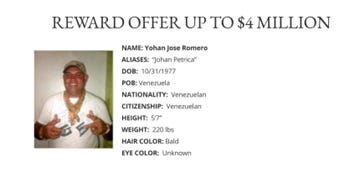
Two other top TdA fugitives who may be moving with Guerrero in Brazil are his right-hand man, Yohan José Romero (alias Johan Petrica), and Giovanni Vicente Mosquera Serrano. Petrica, 47, runs the group’s illegal gold mines in Venezuela, especially around Las Claritas, and also supplies TdA with military-grade weapons. In 2018, he appeared in Brazil under his real name to register his son’s birth in Boa Vista, where he owns multiple properties. The United States has offered $4 million for his capture.
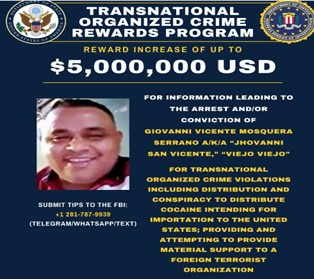
Mosquera Serrano, 37, appeared on the FBI’s Ten Most Wanted list in July 2025, accused of coordinating TdA operations ranging from drug and human trafficking to arms smuggling and violent crimes in the U.S. Washington is offering $3 million for his arrest.
Journalist Donna Rísquez, author of the book El Tren de Aragua, has also reported that group co-founder Larry Amaury Álvarez Núñez, alias Larry Changa — who was arrested in Colombia in 2024 while operating in Chile — regularly sent money to Brazil as well as Venezuela and Spain.
Expansion Elsewhere in Latin America
TdA’s expansion into Mexico is especially concerning — for its control over migrant routes, often involving ransom kidnappings, and for its proximity to Mexican cartels. Mexico Security Secretary Omar García Harfuch confirmed in December 2024 that TdA members “are engaged in sexual exploitation and human trafficking.”
In July 2025, Chilean authorities uncovered 14 shell companies set up between 2020 and 2024 to launder $13.5 million via bank transfers and cryptocurrency. Chilean prosecutor Trinidad Steinert confirmed these profits stemmed from “human trafficking, murders, kidnappings, extortion, migrant smuggling, drug trafficking, and ‘fines’ imposed on anyone entering TdA-controlled territory.”
“What we are seeing is that Tren de Aragua is copying the money-laundering strategies developed by the Sinaloa Cartel or Jalisco New Generation Cartel,” Mexican security analyst David Saucedo told DW.
Analysts believe TdA may also move into synthetic drug markets, where there is more space for new players than in cocaine. In July 2025, Colombian authorities arrested two members wanted by a U.S. federal court in Colorado: Luis Alejandro Enríquez Charaima, alias Álex, and Luis Fernando Uribe Torrealba, alias Luisito. They are accused of arms trafficking, conspiracy, synthetic drug trafficking, and theft. They were caught in Medellín preparing tusi (known as “pink cocaine”). Colombian authorities said their goal was to expand TdA’s operations in the U.S., setting up clandestine labs for tusi and ketamine.
Though no evidence currently links TdA to Chinese organized crime, particularly the Bang de Fujian, Chile may become a hub for future alliances — not only in synthetic drug trafficking but also in laundering illicit proceeds. Chile’s Public Prosecutor’s Office reports that more than 400 organized crime groups now operate in the country, from Mexican cartels to Chinese mafias, alongside the PCC, Comando Vermelho, Colombia’s ELN, and the FARC. This crowded criminal landscape will almost certainly fuel TdA’s growth unless international cooperation improves through constant intelligence sharing and joint enforcement operations.
Strategic Implications
The new U.S. strategy is already reshaping the tactics of criminal organizations operating across the region. Instead of relying on high-speed “go-fast” boats — now increasingly vulnerable to drones and precision strikes — trafficking networks are dispersing shipments across multiple smaller, low-profile vessels.
At the same time, the use of semi-submersibles and narco-submarines, which are far more difficult to detect by radar or aerial surveillance, appears to be rising.
In February, Colombian authorities intercepted a semi-submersible carrying nearly ten tons of cocaine and arrested its four-member crew. The shift is also affecting trafficking routes. Land corridors are once again gaining importance, particularly those running through Colombia, Central America, and Mexico — a trend documented in recent investigations by InSight Crime, which note that trafficking groups routinely adapt routes in response to intensified maritime interdiction.
Should traffickers increasingly rely on commercial shipping — concealing cocaine in cargo containers rather than transporting it aboard smuggling vessels — criminal networks are likely to deepen their infiltration of ports and logistics companies. Analysts from the Global Initiative Against Transnational Organized Crime warn that containerized trafficking has become one of the fastest-growing methods used by transnational criminal organizations, precisely because it relies on corruption and infiltration of legitimate trade infrastructure.
The tactical removal of Maduro could further accelerate this transformation. Criminal groups may begin operating more like insurgent networks, with decentralized cells, diversified criminal portfolios, and greater reliance on encrypted communications. Networks linked to the so-called Cartel de los Soles — the military-connected trafficking structure long associated with Venezuela — could fragment into competing factions.
A range of actors, including transnational criminal networks such as Tren de Aragua, armed colectivos and elements of the state apparatus, are likely to compete for control of lucrative territories and illicit markets. The resulting instability could spill across the 2,200-kilometre border with Colombia, where groups such as the National Liberation Army (ELN) and dissident factions of the Revolutionary Armed Forces of Colombia already hold territorial influence.
 | A guest post by
|