
The 1989 Medfly Attack: A Unique Intersection of Eco-Terrorism, Agro-Terrorism, and Entomological Terrorism


Preamble
The 1989 medfly attack on California agriculture by the Breeders is an interesting example of several disparate strands of terrorism – eco-terrorism, agro-terrorism, and entomological terrorism – coming together. The Breeders were ultimately able to exert economic pressure and the court of public opinion to successfully achieve their goals.
Introduction
While terrorism may be fundamentally defined as the use of violence or threats to intimidate a government or population in the pursuit of ideological, religious, or political goals, it remains a complex and ever-evolving field. As online discourse continues to increase, the possibility of cross-pollination between various modes of extremist thought continues to rise. Narratives, strategies, and beliefs are increasingly spreading between extremists of diverse ideological backgrounds.
The danger of this cross-pollination is that terrorist activities will become increasingly unpredictable. In this article, we demonstrate how a single 1989 terrorist campaign – launched before the Internet, but still influenced by multiple strands of terrorist thought – shows how these intersections of ideology and strategy can become dangerously effective.
Eco-Terrorism: A Returning Threat?
In January 2026, a left-wing, anti-capitalist extremist group known as the Vulkangruppe claimed responsibility for an arson attack on Berlin’s power grid, cutting power to over 45,000 households and 2,000 businesses across the German capital. The group framed the terrorist attack, which included hospitals and retirement homes, as a protest against fossil fuels. This attack is part of a wider-ranging strain of ecoterrorism in Western nations that has persisted for several decades; within the United States, groups such as the Animal Liberation Front (ALF) and Earth Liberation Front (ELF) have committed hundreds of criminal acts and caused damages in the tens of millions of dollars. Previous evidence indicated that eco-terrorism peaked in the 1980s; however the recent attack by Vulkangruppe shows that eco-terrorism remains a disruptive force within the extremist community. Indeed, recent studies have indicated that a number of accelerationist groups – typically focused on attacking energy, transportation, and communication infrastructure – have increasingly begun to incorporate ecological rhetoric within their wider ideologies, influenced by a number of factors including climate change, mass migration, and the influence of figures such as Ted Kaczynski. In 2019 alone, the perpetrators in both the Christchurch, New Zealand and El Paso, Texas shootings released manifestos in which they described themselves as “eco-fascists” and stressed environmental themes. Similarly, the perpetrator of a mass shooting at a Buffalo, New York supermarket in May 2022 claimed that he did the attack in the name of “green nationalism.” An August 2025 paper, published a mere five months before the recent Vulkangruppe attack, specifically noted the worrying trend of radicalization and increasing militancy within the wider German climate protest movement.

Within France, a number of ZADs (“Zones to Defend”) have emerged from the increasingly radicalized environmental movement. In March 2025, a large protest targeted a water reserve meant for agriculture in Sainte-Soline. Protestors were able to sabotage pumps supplying the water reservoir, forcing a costly reconstruction and a constant police presence. Literature including the “L’appel des Soulèvements de la Terre” (”The call for Earth Uprisings”) have circulated through the movement, calling for targeting infrastructure that threatens the environment.
Agro-Terrorism
The deliberate targeting of agriculture in warfare is as old as mankind, from the deliberate “ravaging” of the countryside in the interminable wars of classical Greece, the chevauchée of the Hundred Years War, to the scorched-earth tactics of William Tecumseh Sherman’s “March to the Sea” in the American Civil War. While the mere presence of terrorist activity is enough to substantially reduce local agricultural yields and productivity, agro-terrorism is an often underrated potential security threat. A number of terrorist organizations engage in this behavior; for example, throughout Syria and Iraq, the Islamic State has punished regional farmers that did not pay tribute with extensive crop destruction through arson and expanding wildfires. Throughout 2018, Hamas used a number of incendiary kites, exploding balloons, and even condoms inflated with helium to start fires across Israeli territory, damaging thousands of acres of agricultural land; at the peak of the attacks, 25 fires were reportedly ignited in a single day. While rare, the United States has had occurrences of agro-terrorism in the past. During World War I, German agents deliberately infected over 3500 horses with anthrax and glanders, eliminating them from potential wartime service. Other examples include the sudden death of dozens of cows owned by an African-American group in Ashville, Alabama in 1970, possibly due to a mass cyanide poisoning perpetrated by the Ku Klux Klan. The economic impact of agro-terrorism can be massive; in 1978, when the Arab Revolutionary Council claimed to have poisoned Israeli oranges with mercury, Israeli orange exports collapsed by 40 percent.
American agriculture is an economic juggernaut, with exports of $176 billion in 2024 alone. Unfortunately, this also makes it a tempting target. A number of terrorist organizations have considered attacking the American agricultural sector for decades. In 2002, American forces in Afghanistan discovered thousands of al-Qaeda documents covering US agriculture and potential methods of attacking it. It may even be a target for state actors; in 2024, two Chinese nationals were arrested after being found attempting to smuggle the fungus Fusarium graminearum into the US through the Detroit Metropolitan Airport. While the perpetrators claimed they had smuggled the fungus in for research at the University of Michigan, F. graminearum, known as “head blight” poses a potentially devastating threat to wheat, barley, maize, and rice production.
Entomological Terrorism
The use of insects in warfare stretches back millennia, with the earliest hypothesized use being prehistoric humans throwing nests of stinging insects as early as 100,000 years ago. Entomological terrorism encompasses a wide range of insect species, including pests such as the Mediterranean fruit fly and the durra stem borer, insects that pose a significant risk to crop yields and have the potential to cause vast economic damage. Other proposed uses of entomological terrorism include using insects as disease vectors, such as in Imperial Japan’s deployment of plague-infected fleas across China during World War II, and the Soviet Union’s experimentation with insect vectors during the Cold War. Insects have even been proposed as an unconventional radiological dispersion device (RDD), in which insects contaminated with radiation are released into the civilian population.
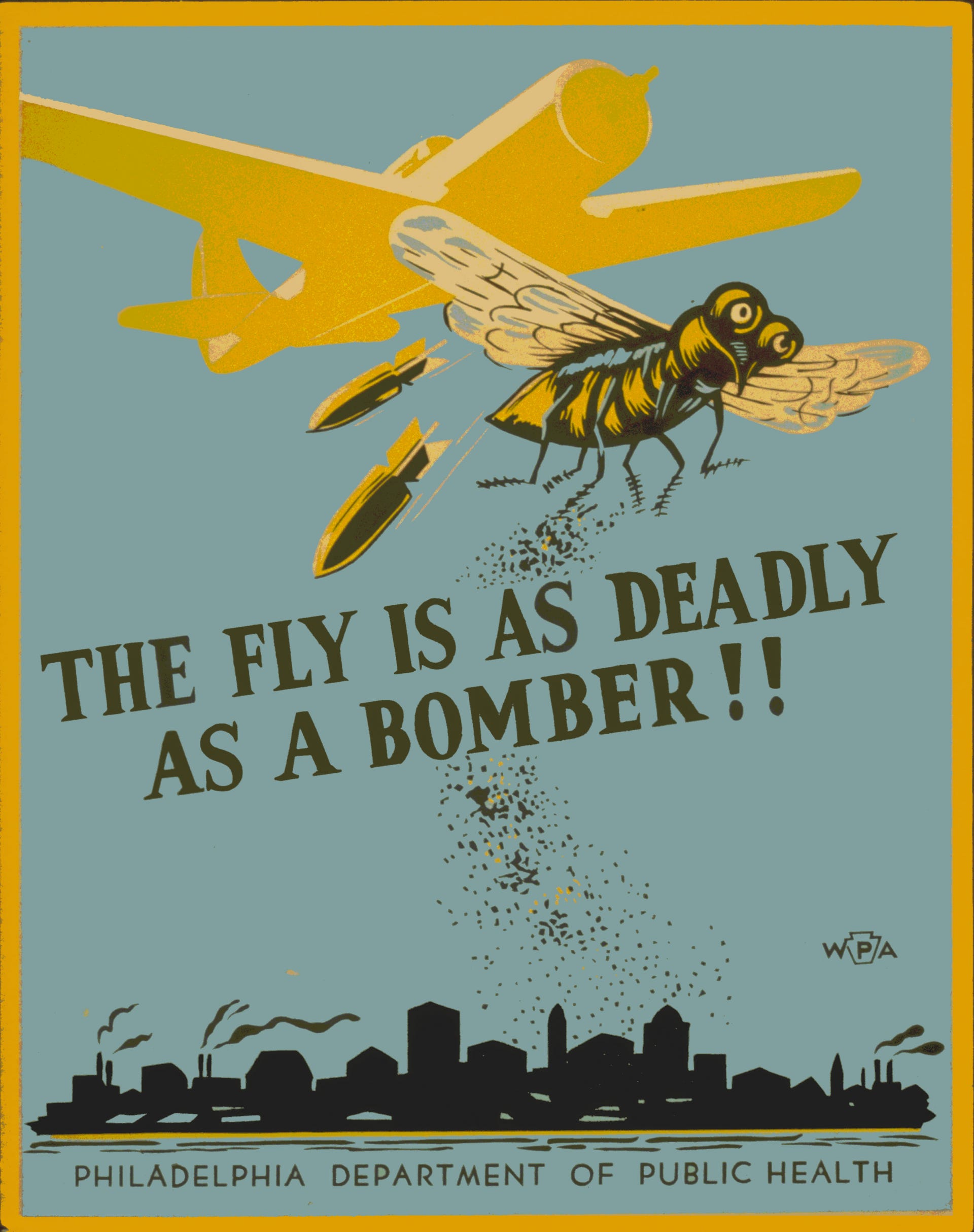
Entomological terrorism, while rare, can be performed cheaply and with minimal resources. Insects may be obtained through obtaining samples in the wild or through simple breeding, and quickly deployed at scale.
Entomological terrorism is uniquely suited to furthering agro-terrorism, as insects can spread pathogens among crops and livestock or directly damage them. The economic cost – in terms of lost crop productivity, an increased need for pesticides and veterinary treatment, subsequent trade restrictions, and the administrative burden on local and federal governments – can exponentially compound. Livestock may be targeted through deployment of biting insects such as the screw worm fly or the warble fly. Other invasive pests that could cause significant agricultural damage include the silvery moth – which poses a significant threat to field crops, vegetables, and greenhouses across an estimated 50 percent of the continental United States – and the light brown apple moth, which could pose a threat to fruit production across an estimated 90 percent of theUnited States. In one simulated scenario, a small group of terrorists disguised as tourists successfully spread grape lice throughout the vineyards of California, wiping out two thirds of the state’s wine production and costing the economy over $1 billion.
The 1989 Medfly Attack
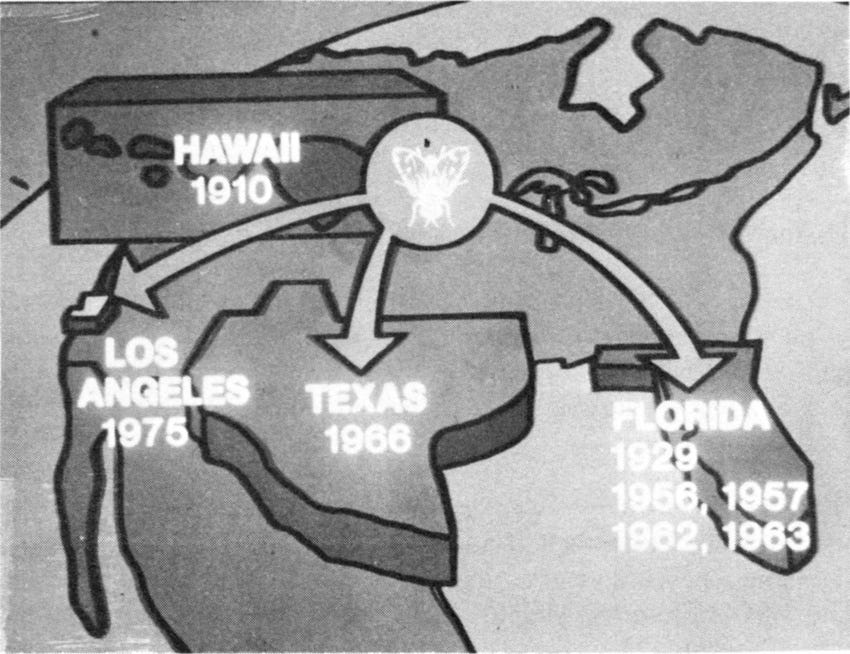
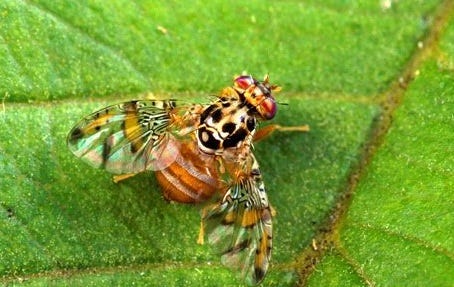
Three disparate strands of terrorism – eco-terrorism, agro-terrorism, and entomological terrorism – uniquely came together in 1989. In September of that year, California officials noticed an unusual infestation of the Mediterranean fruit fly, better known as the medfly. Originally indigenous to Africa, the medfly spread to Hawaii in 1910, and has periodically infested California since 1975. The medfly poses a significant threat to agriculture, and is considered the “world’s most destructive pest of fruits,” capable of inflicting astronomical economic losses. It is uniquely adapted to the climate of southern California, which is one of the most productive agricultural regions in the world, and thus poses a significant threat to multiple crops, including oranges, peaches, mangoes, avocadoes, coffee beans, grapefruits, cocoa, and dates.
In 1989, officials discovered a worrying new medfly infestation spreading across the state. As part of the standard treatment at the time, the state used aerial-deployed pesticides in the contaminated regions, due in large part to the severe economic threat that the medfly posed to the region’s citrus production. Malathion, the pesticide that the state used, was a great source of contention for the local environmental community, which had protested its use during an earlier 1980-1982 medfly infestation. Public discourse about the use of malathion at the period was so contentious that B.T. Collins, director of the California Conservation Corps, once drank a small glass of the pesticide on television in an attempt to prove its safety. Despite this, fears about the potential health and environmental effects of aerial spraying lingered. The very visible spraying of malathion from helicopters, even when at a very low dose, was of particular concern to many California suburbanites. The political fallout from spraying campaigns – pitting the interests of farmers against environmental activists – was often intense, and had played a significant role in Governor Jerry Brown’s failed senate campaign in 1982.
Likely radicalized by earlier protests against the use of malathion, a group that called itself the Breeders sent a two-page typewritten letter to the Los Angeles Times. The letter declared that “the biosphere of the planet is on the verge of collapse” and excoriated the state for its use of malathion. Within the letter, the Breeders claimed that they had been deliberately breeding medflies and releasing them within Los Angeles and Orange County since March of that year. The group also threatened to release medflies within the highly productive San Joaquin Valley if the state did not halt its use of aerial pesticides. “Every time the copters go up to spray, we’ll… release a minimum of several thousand blue-eyed Medflies,” the letter threatened.
While a number of officials suspected that the Breeders were a hoax, internal discussion by both state and federal employees strongly suspected that they were a real threat. The medfly infestation was highly unusual, with massive surges in the insect population occurring outside of their normal breeding season, infestations skipping 15 to 20 miles between locations, and adult flies suddenly appearing just outside of areas that had already been sprayed. Forced to react, the state had to expend resources to steadily expand the ever-spreading spraying area; this had the further effect of eroding public support as California citizens became disgruntled with being part of an “entomological war zone.” The Breeders continued to send copies of their letter to various newspapers, further taunting officials throughout the spreading infestation.
Despite investigations by the Los Angeles Police Department and the United States Department of Agriculture’s Office of Inspector General, officials were unable to find any conclusive leads. Aside from the letter, the only further contact from the Breeders was through a brief phone call in response to a classified ad, in which an unknown male simply repeated the threat of further medfly release if any further spraying was done. Wary of further economic damage, the state ultimately announced a two-week delay in further spraying operations. Officials switched tactics from aerial spraying, opting to instead introduce sterile flies into the local population, as well as tightening quarantine procedures. The state’s infestation rapidly declined and finally ended in November 1990. Aside from a handful of minor infestations in 2007 and 2008, there have been no significant outbreaks of the medfly in California since.
A subsequent 2001 study ultimately concluded that the Breeders had been a legitimate attack on California’s agricultural infrastructure. Furthermore, the Breeders’ stated goal of making “aerial spraying politically and financially intolerable” for the state can be viewed as an unqualified success. For over 30 years, there has been no further contact, leads, or physical evidence associated with the Breeders.
Several theories have been proposed to explain how the Breeders successfully spread the infestation. A number of officials theorized that the group was simply breeding medflies “in a garage somewhere in the L.A. basin.” However, medflies are reportedly difficult to rear in captivity. It may have been that the group had only a handful of medflies, but deliberately planted them in fly-catching traps set up by the state, thus tampering with data collection and artificially making the medfly infestation appear exponentially worse. Whether the sabotage was part of a systematic campaign or cunningly localized to a few collection sites, the end result was the same – the Breeders were able to manipulate economic pressure and public opinion to achieve their stated goals. In hindsight, the state got off lightly. Had the group targeted the extremely productive Central Valley, rather than confining its activities to the area surrounding Los Angeles, the economic fallout could have been catastrophic.
Conclusion
The 1989 Breeders medfly infestation is a unique example of three disparate strands of terrorism – eco-terrorism deliberately targeting agricultural production to exert economic pressure, employing the unusual tactic of entomological weaponry – coming together. By any standard, the attack was an unqualified success. No members of the group have ever been identified, and the Breeders were able to successfully bend the state to their will. While agro-terrorism and entomological terrorism fortunately remain rare in the West, the rising tide of eco-terrorism is concerning. The Breeders demonstrate the influence that even small, single-issue groups may exert upon the state. As cross-pollination between various terrorist ideologies increases, so does the future risk of similar attacks occurring.
Bio
Captain Matthew David Turner is a current activity-duty U.S. Army physician. Dr. Turner has long been interested in the intersection of medicine and history, with publications examining historical disease outbreaks, biological and chemical warfare, ancient pathology, toxicology, and military medical lessons. He also writes about the evolving world of counterinsurgency and counterterrorism, including modern conflict medicine and the use of chemical weapons by violent non-state actors. Professional updates are available on LinkedIn.
 |
|