

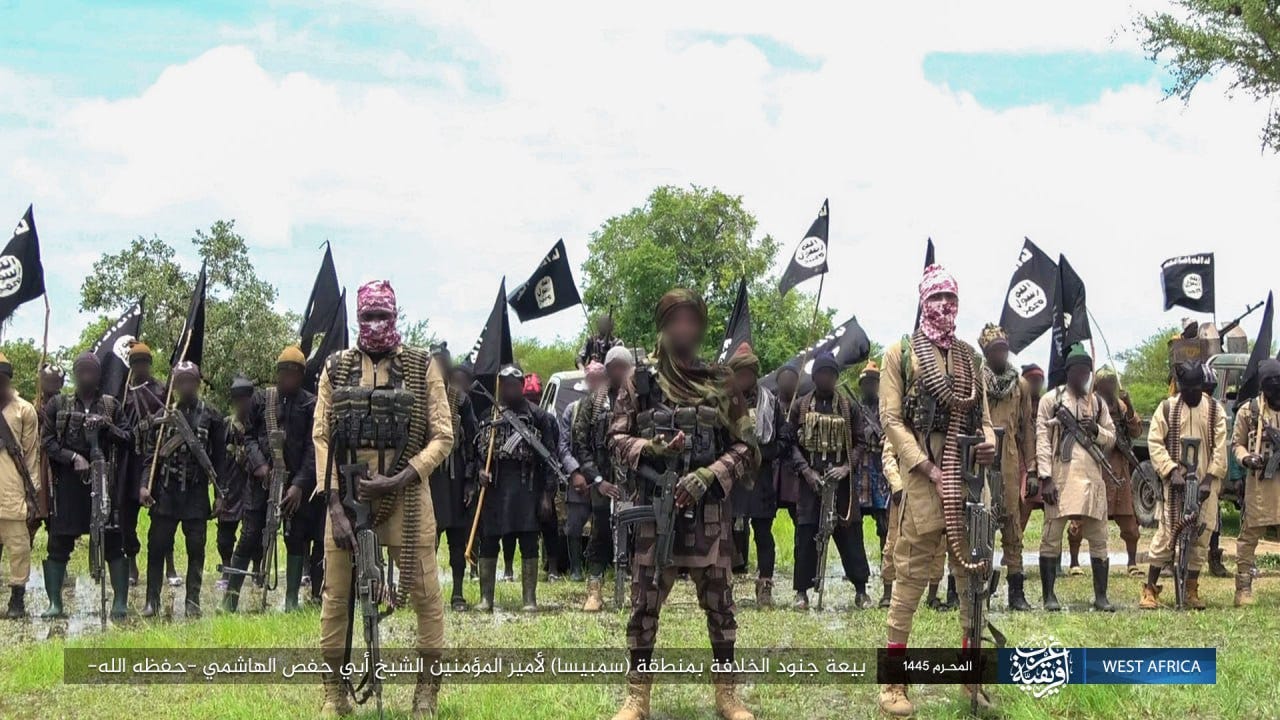
Nigeria’s domestic insecurity has increasingly been instrumentalized within U.S. foreign policy discourse. In November last year, President Donald Trump threatened direct kinetic intervention to counter a so-called “Christian genocide” in Nigeria. Despite these claims, insecurity is driven by overlapping and long-standing land disputes, herder-farmer tensions, communal violence, and organized crime, with the vast majority of victims of militant violence in northern Nigeria being Muslim. Washington’s framing of the crisis through a religious lens, therefore, reflects political utility rather than empirical accuracy.
Washington’s strategic recalibration in West Africa has occurred alongside an ongoing decline of U.S. influence across the Sahel. Following Niger’s 2023 coup, the United States lost its primary intelligence hub at Air Base 201 near Agadez, while Chinese and Russian engagement expanded as junta-led governments increasingly distanced themselves from Western security partnerships. Since its expulsion from Niger in 2024, Washington has sought to reconstitute its regional intelligence and security posture, with Nigeria emerging as a central anchor for U.S. engagement. These have efforts have been made visible shift has bed by a marked increase in U.S. intelligence, surveillance, and reconnaissance (ISR) activity over Nigeria since late November, with flights reportedly originating from Ghana—underscoring Washington’s efforts to project influence and maintain situational awareness outside the Alliance of Sahel States (AES), including through partners such as Ghana, Benin, and Chad.
After weeks of escalating rhetoric, President Trump announced on December 26 that U.S. forces had conducted airstrikes against “Islamic State elements” in Nigeria. The operation is considered to be one of Washington’s most direct kinetic interventions in Nigeria’s domestic security landscape to date. On Christmas Day 2025, in coordination with Nigerian authorities, U.S. forces struck targets in the north-western state of Sokoto, ostensibly targeting Islamic State-linked militants operating under the label “Lakurawa.” The strikes were conducted using MQ-9 Reaper unmanned aerial vehicles and at least sixteen GPS-guided precision munitions launched from platforms in the Gulf of Guinea. The strikes were framed as a pre-emptive effort to prevent Islamic State elements from “penetrating Nigeria from the Sahel corridor.”
Despite the recent Sokoto strikes targeting “Islamic State militants” associated with Lakurawa, the term itself remains loosely defined, locally encompassing several intersecting but operationally disparate actors. Local accounts suggest that some Lakurawa-linked militants are also affiliated with al-Qaeda-aligned Jama’at Nusrat al-Islam wal-Muslimin (JNIM). Open-source reporting further indicates that “Lakurawa” is used interchangeably to describe Salafi-jihadist cells, criminal militias, and bandit networks, while some fighters may maintain ideological or operational linkages with the Islamic State Sahel Province (ISSP) or JNIM. Attribution remains inconsistent, and evidence of a consolidated Islamic State base in Sokoto remains limited.
Nearly three weeks on, the “Christmas Day” operation raises more strategic questions than it resolves. Sokoto is not Nigeria’s primary jihadist epicentre, and Lakurawa’s status as a structured Islamic State affiliate remains contested and tenuous. Meanwhile, the country’s most entrenched and operationally mature Islamic State faction — the Islamic State West Africa Province (ISWAP) — continues to consolidate its presence in northeastern Nigeria and along the periphery of the Lake Chad Basin. It has consolidated terrorists in the region through an elaborate system of governance, filling gaps in the state apparatus, and through its increasingly central role in the regional Islamic State network, including hosting the Al-Furqan media office.
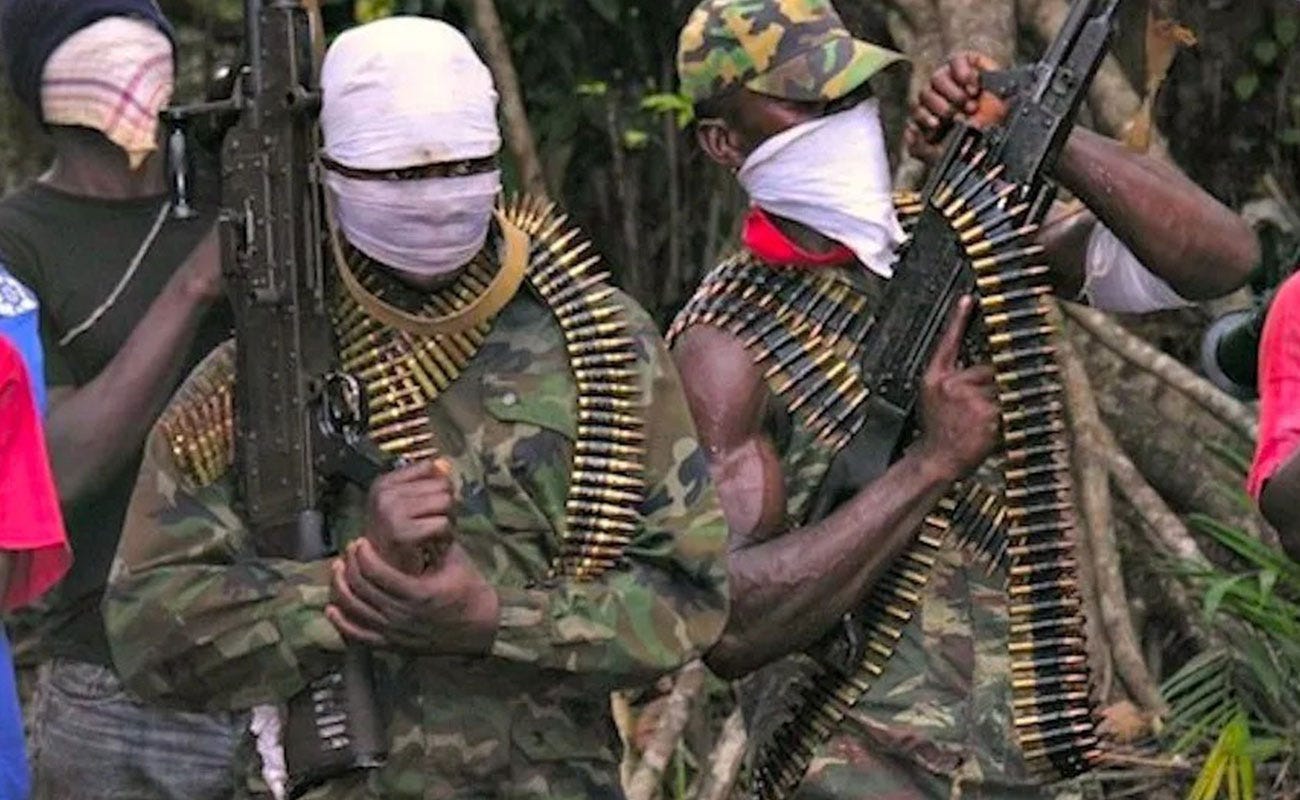
In light of this, scrutiny has centred on why strikes in the northwest were prioritized over operations in the northeast — where Islamic State is most active in Nigeria — and over ISWAP, whose primary areas of operation remain concentrated in Borno and Yobe states following its 2016 split from Boko Haram. Several explanations have emerged. Part of the rationale appears symbolic, with Sokoto’s historical status as the seat of the 19th century Sokoto Caliphate amplifying its political resonance. Lakurawa’s alleged links to the Islamic State Sahel Province (ISSP) — active in the Liptako-Gourma tri-border region and recently linked to several external plots in North Africa — may also have aligned with the Trump administration’s preference for targeting Islamic State affiliates framed as transnational threats.
The choice of Sokoto as a target of U.S. airstrikes is therefore significant. Beyond its proximity to Niger and Sahelian transit routes, the state holds symbolic importance as a historic and spiritual centre of Islam in Nigeria. It has also suffered escalating banditry, kidnappings, raids, and extortion. Moreover, from Washington’s perspective, ISSP may represent a model of transnational jihadist expansion exploiting governance vacuums and coup-induced instability.
By contrast, northeastern Nigeria remains the country’s jihadist heartland. Boko Haram splinter factions ISWAP and Jama’atu Ahlis Sunna Lidda’awati wal-Jihad (JAS) retain territorial influence across Borno State, anchored in the Lake Chad Basin, Sambisa and Alagarno forests, and cross-border corridors. ISWAP has evolved into one of the Islamic State’s most strategically significant African affiliates. In this context, the Sokoto strikes appear vastly misaligned with Nigeria’s most acute jihadist threat.
Trump has continued his escalatory rhetoric in a New York Times interview last week, stating: “I’d love to make it a one-time strike… But if they continue to kill Christians, it will be a many-time strike.” Following the Christmas Day strikes, U.S. ISR operations expanded over the north-eastern Borno state, including over the Sambisa Forest and the Timbuktu Triangle, and Washington delivered “critical military supplies” to Abuja. Yet kinetic interventions are unlikely to generate durable gains against Boko Haram’s decade-long insurgency, which escalated sharply in early 2025 as a result of a series of successful ISWAP operations.
The Nigerian Air Force (NAF) has performed poorly in its strike campaigns. Significant collateral damage and high civilian casualty rates resulting from Nigerian air strikes have eroded legitimacy and heightened domestic grievances vis-à-vis the state. Integrating U.S. systems into Nigerian operations reflects both the perceived precision of American platforms and the political utility of externalizing responsibility when operations fail. Persistent structural deficiencies within the Nigerian military mean that, despite significant defence spending, state forces have been consistently overwhelmed by jihadist groups.
ISWAP’s recent territorial and operational gains have been driven by these deficits, reinforcing perceptions of state fragility. Nigerian forces suffered high-visibility setbacks during the Islamic State’s “burn the camps” campaign in early 2025. Abuja has consequently prioritized short-term symbolic victories over long-term capacity building, deepening an asymmetric dependency on U.S. military assistance.
Last year alone, ISWAP carried out more than 300 attacks against military compounds, critical infrastructure, and civilian communities. These battlefield successes are, in part, a product of increased direct support from the Islamic State (IS) core, as well as tactical innovation, streamlined skill-sharing between IS affiliates, and the diffusion of advanced weaponry, alongside Sahelian geopolitical realignments toward Russia and China. Simultaneously, regional military cooperation has deteriorated in recent years. Niger’s withdrawal from the Multinational Joint Task Force in March 2025 disrupted intelligence-sharing and joint operations, while Chad’s threatened exit underscores the Task Force’s fragility. Strained Abuja-Niamey relations have further created operational vacuums along the Niger-Nigeria border, which jihadist and criminal groups have been quick to exploit.
Operationally, ISWAP has increasingly deployed explosive-rigged commercial drones. Initially used for reconnaissance and propaganda, these systems have since been weaponized — a trend observed across West Africa since late 2024. Influxes of foreign fighters arriving via the Bosso corridor further indicate rising funding, expertise, and external facilitation from the Islamic State core. ISWAP has integrated emerging technologies across surveillance, mobility, financing, and strike functions. Its use of drones, satellite navigation, digital financial channels, and complex VBIED construction reflects a concerted realignment with contemporary conflict environments. These adaptations have expanded ISWAP’s reach and lethality, enabling coordinated attacks on hardened targets even in the face of concerted state counterinsurgency pressure.
The Nigerian military, meanwhile, remains overstretched, under-resourced, and internally compromised. Embezzlement, poor soldier welfare, and logistical sabotage have undercut operational effectiveness, leaving state forces impotent in localized contests against jihadists. Vigilante groups and informal militias increasingly fill security gaps, increasing the likelihood of intercommunal violence in the absence of a state monopoly over the use of force, further fragmenting Nigeria’s security landscape.
 | A guest post by
|