

As he prepared to embark on a killing spree aimed at Minnesota’s Democratic political leadership, Vance Boelter donned a silicone mask and police uniform and stepped into an SUV decked with “law-enforcement style emergency lights.” “This is the police. Open the door,” he shouted, moments before shooting and seriously wounding a state senator and his wife. “By posing as a police officer, Boelter compelled the Hoffmans to answer their door,” the U.S. Attorney’s Office in Minnesota alleged.
Over an hour before the gunman eventually shot and killed State Rep. Melissa Hortman and her husband, local law enforcement knew the assailant was dressed as one of them: “be advised: suspects were dressed as police officers.” The outfit was effective enough that a law enforcement officer dispatched to protect an unnamed official’s home during the unfolding attack thought Boelter was another responding officer, and failed to stop him before he proceeded to his next target.
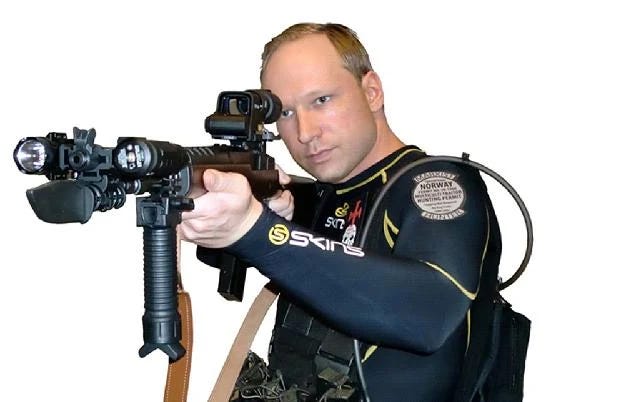
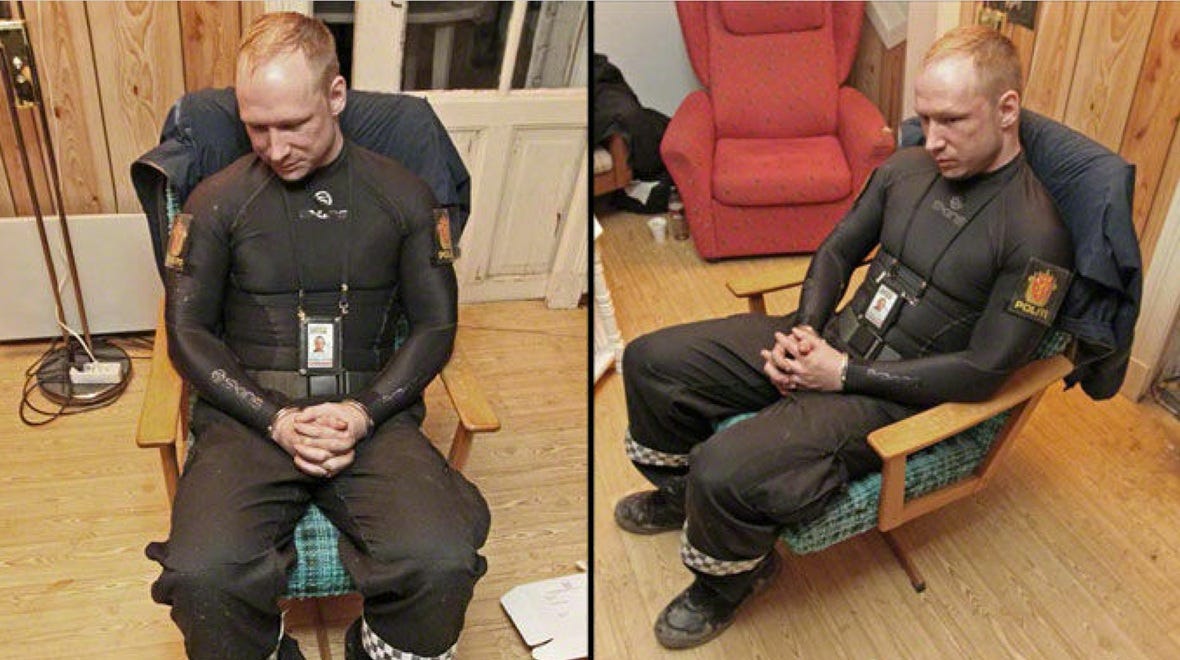
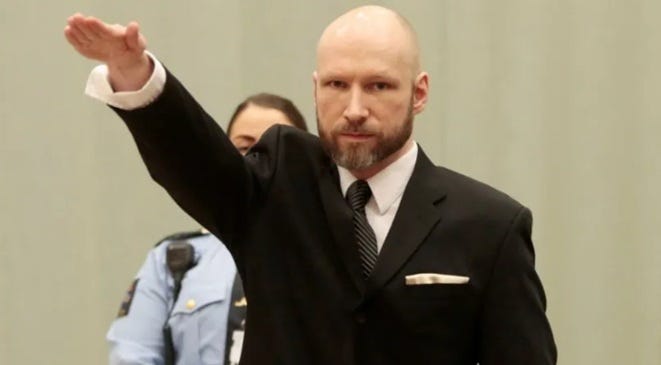
The recent history of terrorism in the United States and beyond is rife with deceit and disguise, as attackers have repeatedly betrayed their victims’ trust in order to wreak further havoc. Perhaps most lethally, the neo-Nazi Anders Behring Breivik, who had already committed an explosive attack on Oslo’s political quarter, tricked his way onto Utøya island by wearing a police uniform and telling the suspicious children that “Officers are being posted at various locations … to make sure nothing more happens.” He killed an additional 69 people on the island. A similar deception was employed by Gabriel Wortman, a denturist from Nova Scotia in Canada who embarked on Canada’s worst killing spree in April 2020. Wortman drove a replica Royal Canadian Mounted Police vehicle, repeatedly evading the law enforcement response by hiding in plain sight. Beyond the immediate tactical advantages reaped by these deceptive terrorists, according to Samantha Olson, police impersonation has the added benefit of eroding trust in the state: “When bad actors turn symbols of protection into disguises for predation, they sow doubt in the entire chain of public safety.”
In the history of terrorism and other mass violence, the disguises donned by violent extremists have been responsible for hundreds of extra deaths, causing a significant counterterrorism challenge, particularly for responding law enforcement faced with a manhunt against a hidden target. As our era of mass violence continues, more clever defenses should be prepared to mitigate attacks from disguised terrorists.
“[T]hey think I’m one of them”: Using disguise to infiltrate a target
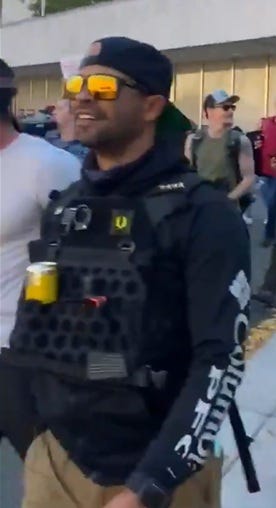
Terrorists and mass killers employ disguise for one simple and cold-blooded reason: the deception allows attackers to violate the trust placed in them by their hosts, permitting them closer access to the heart of their target. Hard targets and soft targets alike have been penetrated by disguised terrorists. Perhaps the most infamous incident in the former category occurred at Khost in Afghanistan in 2009, when an al-Qaeda triple agent killed seven CIA officers having successfully navigated several security checkpoints. At Karbala in Iraq, in 2007, four American soldiers were brutally murdered by attackers wearing “U.S.-style uniforms, suggesting a catastrophic lapse of security—or the possibility that the enemy operation had actually been an inside job.” Earlier, one of the plotters of the USS Cole attack in 2000 was charged with “perfidy,” a war crime under international law, because the attackers had waved to the sailors in an attempt to gain closer access. Terrorists plotting attacks on commercial aviation have meanwhile tried to dispatch bombs disguised in shoes, underwear, and even dogs, and in one particularly heinous plot during an earlier wave of violence between Hamas and Israel, a Hamas operative had been instructed to dress as a “pregnant Jewish woman” to conceal an explosive device. On the U.S. front, a January 6 planning document, authored by members of the neo-fascist Proud Boys, had similarly encouraged offensive forces to blend in: “Be dressed in suits and unsuspecting,” it suggested, adding “do not look tactical at all.” (It should be noted that former Proud Boys chairman, later revealed to be an FBI informant, Enrique Tarrio, was regularly seen in body armor along with other cadre members in similar kit.) Other terrorists have exploited faked surrenders and joint training and education to commit more penetrative attacks.
Yet the bloody history of disguised terrorists exploiting soft targets is arguably even longer. Dylann Roof, the white supremacist neo-Confederate who murdered nine worshipers at the Mother Emanuel AME Church in Charleston, SC, in June 2015, spent over an hour in contemplative bible study and prayer with his victims. A similar ruse was employed by a terrorist who took hostages at Congregation Beth Israel in Colleyville, TX, in January 2022. He appeared cold at the synagogue doors, and the rabbi offered him tea, before later finding himself held at gunpoint. In Greenock, Scotland, a neo-Nazi teenager spent months infiltrating a mosque, working to build trust while undertaking surveillance ahead of a planned arson attack. “It’s good to infiltrate the target, be it a mosque or synagogue, as they think I’m one of them because I infiltrated the place,” he told digital friends before his plot was interdicted. Also in Europe, several attacks have involved assailants pretending to take part in legitimate deradicalization and rehabilitation initiatives (which two analysts call “disguised compliance”), only to use their pedestal to murder their case officers. Disguised attackers seeking soft targets are particularly corrosive, because they generate suspicion among locales that are designed to be open to the community. “It gives us a lesson in the future about who comes in and what their intentions are. We have more security cameras now,” mosque leaders reflected after the Greenock plot.
The Hortmans and Hoffmans were not the only public figures targeted at their home, the softest of targets without security details. In July 2020, Esther Salas, a New Jersey federal judge, was attacked by a so-called men’s rights activist posing as a delivery driver. She survived unharmed, but her son was murdered in the attack. Investigators later discovered that the gunman had murdered a rival lawyer eight days earlier in California, in similar fashion.
Disguised terrorists represent a close cousin of the human shield approach taken by more organized terrorist groups facing state repression and crackdown. Indeed, Hamas terrorists who hide amidst hospitals in Gaza have much in common with Melissa Hortman’s murderer: both attempted to blend into the legitimate functions of society in order to achieve tactical supremacy over their enemy. In military expert Benjamin Jensen’s words, “Your goal is to gain a relative advantage at the lowest possible cost to yourself, and with the lowest possible benefit for your adversary.”
Disguise, in other words, is one of the chief measures through which a terrorist may gain an advantage over their victim.
State violence, perfidy, and war crimes
Yet the construction of taboos against terrorist use of deceit and disguise is arguably unfortunately undermined by state deployment of this tactic. Earlier this year, the New York Times reported that the U.S. military had used a “secret aircraft painted to look like a civilian plane” in an attack on an alleged drug boat in the Caribbean Sea. “Shielding your identity is an element of perfidy,” one former U.S. Air Force major general and judge advocate general said, with another asking whether “apparent civilian status” had been exploited “to gain some tactical advantage.” (A law professor writing in Just Security countered that, “As the incident did not occur during an armed conflict, there was no requirement to mark the aircraft as a military aircraft.”)
Israel, too, has been repeatedly accused of perfidy, for instance over its alleged commandeering of aid trucks to facilitate operations to release hostages after October 7. Although such a deceit might appear honorable or at least justifiable, a UN rapporteur in fact reiterated the practicalities of prohibitions against perfidy, explaining that, “You don’t want an adversary thinking that in every ambulance a fighter is hiding, because if you do that, then all of those things become fair game.” The argument would theoretically apply to even broader uses of civilian infrastructure to mask offensive attacks. In 2008, for instance, Hezbollah’s Imad Mughniyeh, who plotted several mass casualty attacks against American soldiers and diplomats, was assassinated by an Israeli bomb hidden in a parked car. Alleging perfidy, an officer at the International Criminal Court wrote that, “The protection of the civilian populations is already significantly put under pressure in contemporary conflicts in which armed groups use illegal tactics such as the use of human shields,” and that “Regular armed forces, even when engaged in asymmetrical armed conflicts, should not further jeopardize this protection by abusing protection to be afforded to civilian objects for their offensive operations.”
More recently, Israeli civilian settlers in the West Bank have repeatedly donned IDF and police uniforms to carry out raids and detentions against Palestinian families, with “West Bank Palestinians [having] fallen victim to hundreds of acts of violence by Israeli settlers dressed in military uniforms.” A recent report by Israeli activist group Yesh Din found that the blurring between soldier and civilian is carried out as a “matter of policy.”
In the domestic setting, the U.S. government and its law enforcement organs have also long faced criticisms for operations that seek to conceal police presence. By employing undercover agents to infiltrate Muslim communities after 9/11, for instance, police forces alienated many of those who might have provided long-term partnerships in countering extremism within their own communities. Such operations serve to further increase distrust of law enforcement, undermining its legitimate counterterrorism duties—and perhaps encouraging adversaries to turn to dirty tactics themselves to pursue their aims.
Implications
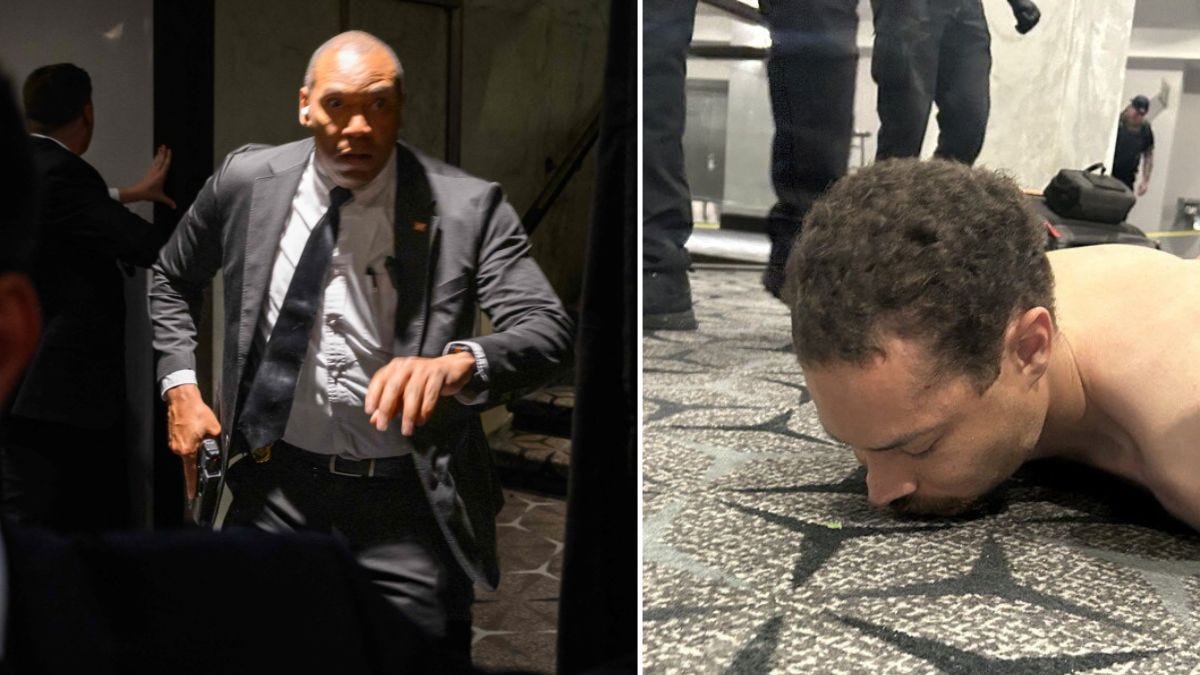
Although he traveled 2,000 miles to kill President Donald Trump and his cabinet, the recent White House Correspondents’ Dinner shooter styled himself as an insider threat. “The security at the event is all outside, focused on protestors and current arrivals, because apparently no one thought about what happens if someone checks in the day before,” a manifesto seemingly penned inside the hotel declared. More damningly, he added, “I walk in with multiple weapons and not a single person there considers the possibility that I could be a threat.” The White House Correspondents Dinner thus has important implications for target defense. First and foremost, guards at security perimeters must be trained and instructed to constantly check biases that might make some people appear less dangerous than others, repeatedly red-teaming possible security vulnerabilities and assessing gaps in the defense. Similar stress tests should be undertaken by other bodies charged with the safety of those who might be threatened, such as members of Congress and even schools (in Argentina, a 16-year-old was arrested for a school shooting plot that included diverting police to a false threat at a nearby shopping mall before entering his school impersonating a police officer. Similarly, plots have been hatched to attack emergency personnel responding to primary incidents of violence, after they occur and as the attacker(s) remain at-large).
Secondly, in combating disguised terrorism, effective dissemination of possible threats as well as subsequent public vigilance—encapsulated by the U.S. government’s longstanding “See Something, Say Something” strategy—is essential. In September 2015, the Pennsylvania Criminal Intelligence Center released a bulletin warning that “First responder impersonators” represented “the new terrorist threat” (the U.S. Department of Homeland Security issued a similar warning as early as 2005). In offering recommendations, the alert suggested, “Situational awareness, effective communication, and suspicious activity reporting will assist in keeping not only our emergency services personnel safe, but also the public.” In 2025, the FBI issued a bulletin warning local law enforcement that criminals were posing as ICE agents, including to commit acts of sexual assault. Distributing such information to the public is essential in building healthy skepticism. Fast, reliable, and effective communication to the public should form an essential part of police training for mass casualty incidents, and should be front of mind during an incident response (indeed, a commission report into the Portapique murders in Canada found that, “The RCMP should fully integrate public communications into its approach to critical incident response, including training and tabletop scenarios, and communications officers should train and practice alongside other members of the command group.”)
Finally, in ensuring the highest of standards, deception on the government’s side should be limited to high-priority law enforcement operations and overseas military campaigns. The line between criminal perfidy and legitimate military deception, such as the “Bodyguard of Lies” that allowed the Allies to land in occupied Europe in June 1944, is razor thin. (One analyst even proposed that, “Wearing an enemy’s uniform for infiltration is permissible. Wearing an enemy’s uniform while shooting at them is perfidy, a prosecutable war crime.”) And in many instances, going undercover serves critical missions and provides human intelligence insights that no other operation can offer. Nevertheless, as Ido Rosenzweig suggests in the context of Israeli operations against Palestinian militant groups, an adversary’s “violations of the principle of distinction do not diminish Israel’s obligation and responsibility,” further counseling that “undercover units must be extremely careful in the conduct of hostilities in order to avoid resorting to wrongful acts.” Building stronger taboos against deceit, disguise, and ultimately perfidy in the prosecution of counterterrorism will only build better standards of what is and is not legitimate ethical and moral behavior.
 | A guest post by
|