

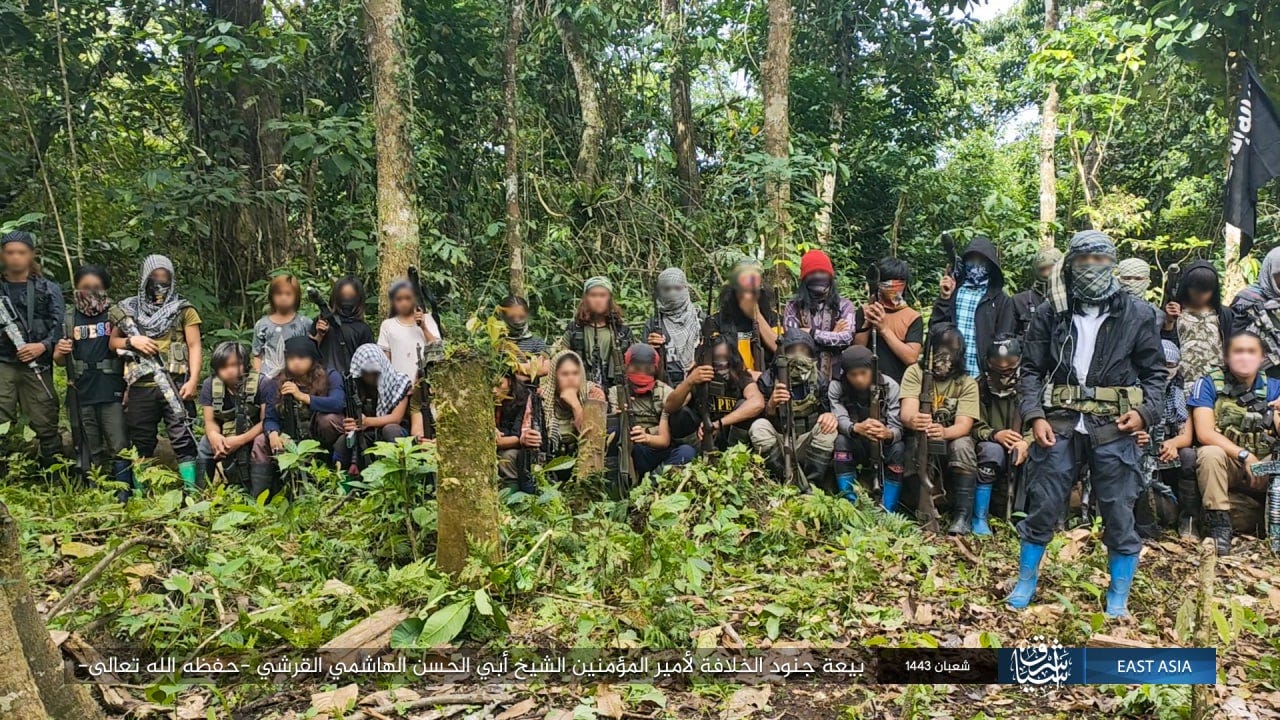
After the Islamic State-inspired attack at Bondi Beach in Sydney, Australia, on December 14, 2025, the deadliest terror attack in the country, there was talk about the potential resurgence of the Islamic State Southeast Asia Province (ISEAP).
The links between ISEAP and the attack have been drawn from the fact that the two perpetrators visited the Philippines a month before conducting the operation.
The Philippines was a hot spot for ISEAP in the mid-to-late 2010s; it was even the location where over 1,000 pro-Islamic State fighters attempted to take over the city of Marawi in the country’s south for five months. This was an attempt to establish a wilayah, or province, in Southeast Asia in 2017. The siege was unsuccessful, and Marawi was retaken by the Armed Forces of the Philippines (AFP). Remnants of pro-IS groups are still active in the Philippines, though they barely have a foothold now. This has led to perceptions that the Sydney attack perpetrators potentially linked up with some of these pro-IS remnants for training or logistical support before their attack.
Australian police are now stating that the Sydney perpetrators acted on their own volition and were not part of a wider network; however, they are still investigating why they were in the Philippines, in a region previously occupied by IS fighters and presumably with remnants and sympathizers still present.
ISEAP in the Philippines Today
The ISEAP, as a cohesive organization, is essentially defunct in the Philippines, Indonesia, and Malaysia, where it had varying degrees of presence and activities. Online chatter by pro-IS supporters continues to suggest that the ISEAP and the smaller groups forming it are present and active, yet that is not true. Security forces in all the aforementioned countries have significantly cracked down on these groups and networks to the extent that the earlier regional coordination and cooperation between pro-IS groups is essentially zero.
Referring specifically to the Philippines, where the IS attempted to form a province following calls from IS-Central in Syria and Iraq, the threat of pro-IS groups has been relegated back to being lower than the threat from the communist New People’s Army (which is the longest-running insurgency in the world, currently). Even the communist threat has been diminished significantly in the Philippines, highlighting how the pro-IS remnants there are essentially unable to organize under the IS banner. There is no IS resurgence in the Philippines; the activity levels of anti-government Islamist groups are at their lowest in decades, and it is a far cry from IS-affiliated groups in West Africa, for example.
In the Philippines, there were three major IS groups (with various factions): the Maute Group, the Bangsamoro Islamic Freedom Fighters (BIFF), and the Abu Sayyaf Group (ASG). The ISEAP emir would often be picked from one of these groups following the killing of the preceding emir. Today, all of these groups fall under the banner of Dawlah Islamiyah, or the Islamic State. Taking a closer look, however, indicates how far these groups have deteriorated in capabilities. The ASG has essentially been decimated after over two decades of terror and historical ties to Al-Qaeda and major terror groups in Indonesia, such as the Jemaah Islamiyah and Jamaat Ansharut Daulah. The ASG was notorious for kidnapping and operating in the Sulu archipelago. There has been no kidnapping since January 2020, and as of last year, the ASG splinter groups have also seemed to have faded away. The Maute Group, which largely led and funded the Marawi siege, is also a sliver of what it once was, and possibly standing on its last legs. BIFF is in a similar position; last year, a BIFF sub-leader, his brother, and his son were killed in a clash with the AFP.
While a large part of the fading presence of IS groups in the Philippines is due to the AFP’s actions, it also comes from the government’s wider movement to integrate disenfranchised Muslim Moro communities who live in Mindanao and were part of groups like the Moro Islamic Liberation Front (MILF). At one point, MILF was a major internal security threat in the Philippines, but following a peace agreement and normalization, the MILF and the AFP have worked together to counter the more radical Islamist pro-IS groups that fall under Dawlah Islamiyah.
As such, recent characterizations of the Philippines and Mindanao, especially as a terror hot-spot, are false and disingenuous; the ISEAP is defunct, and the groups that comprised it are struggling to survive.
 | A guest post by
|