

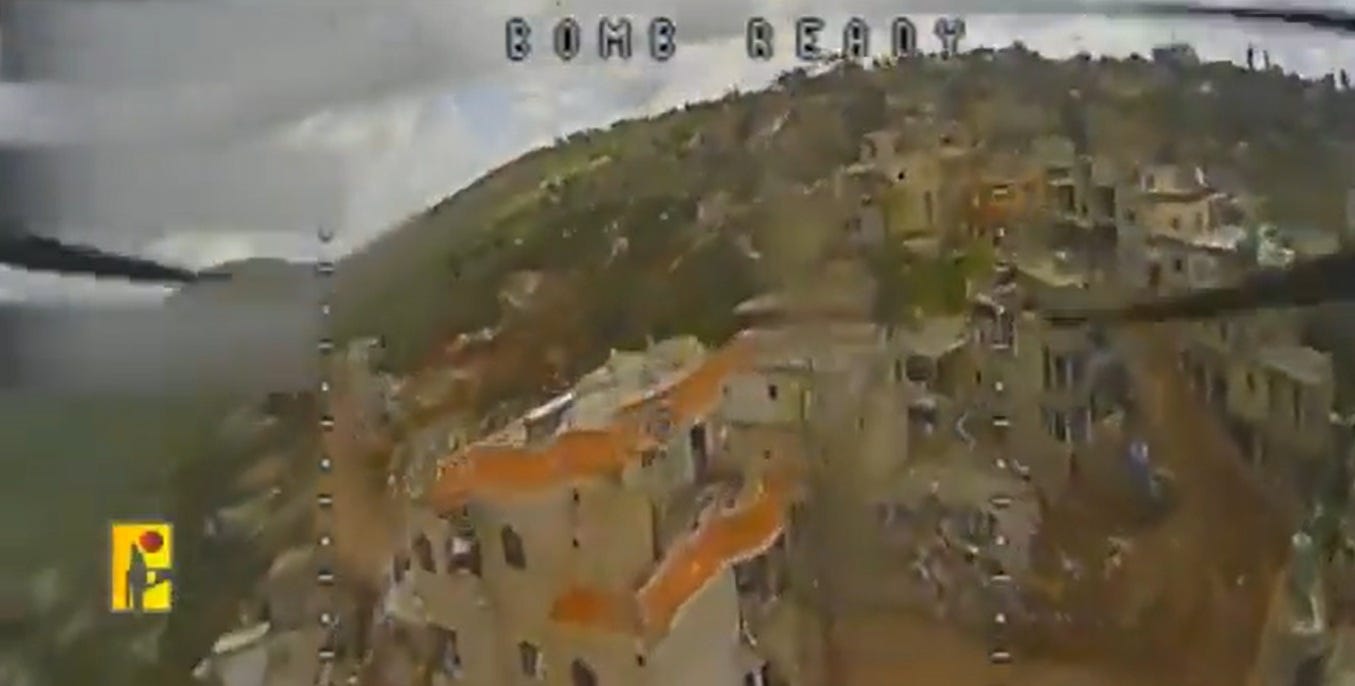
Since the beginning of the joint US-Israeli military campaign against Iran in late February and Israel’s subsequent ground operations to dismantle Hezbollah’s presence in southern Lebanon, the Lebanese militant group and major Iranian proxies in Iraq have launched hundreds of attacks targeting both Israeli and US force and installations across the region.
Unsurprisingly, uncrewed aerial vehicles (UAVs) represent a big share of the weapons used in these attacks, following a pattern that consolidated over the past few years. While fixed-wing long-range attack drones such as the Shahed-101/107 and Sayyad-107 remain the predominant platforms, small weaponized first-person view (FPV) quadcopters popularized by the war in Ukraine have finally made their way into the arsenal of these groups and have been used more regularly for tactical strikes across southern Lebanon and in the surroundings of the Iraqi capital, Baghdad.
Hezbollah’s FPV Drone Campaign
The first publicly documented use of FPV drones by Hezbollah emerged in the spring of 2024, but their employment remained sporadic throughout 2024 and the following year, with nine attacks published by the group on its social media channels (the real number is likely higher). These strikes primarily targeted Israeli fixed military installations – including tactical radars and communication towers – along the Israeli-Lebanese border but played a negligible part in the group’s targeting strategy.
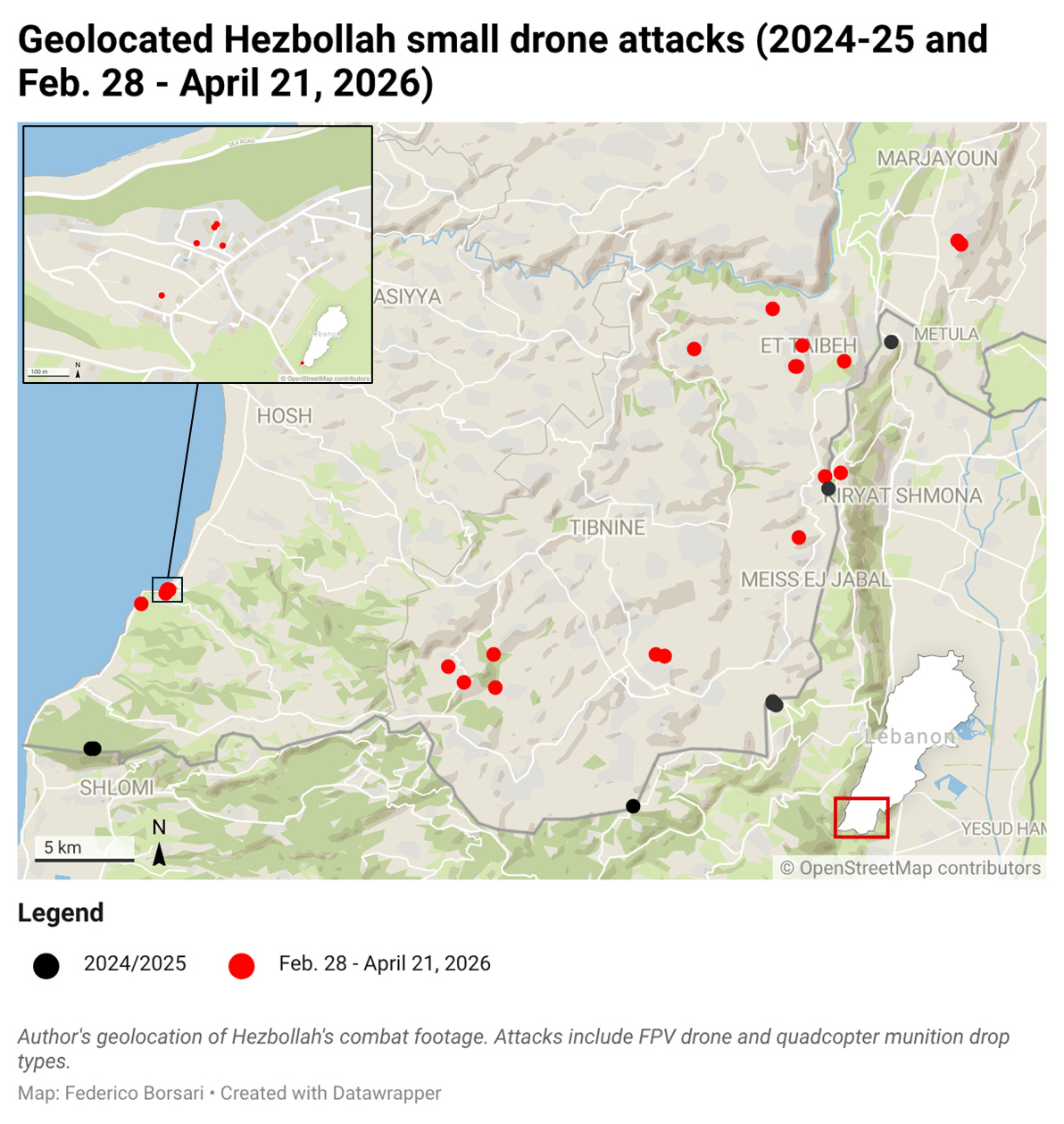
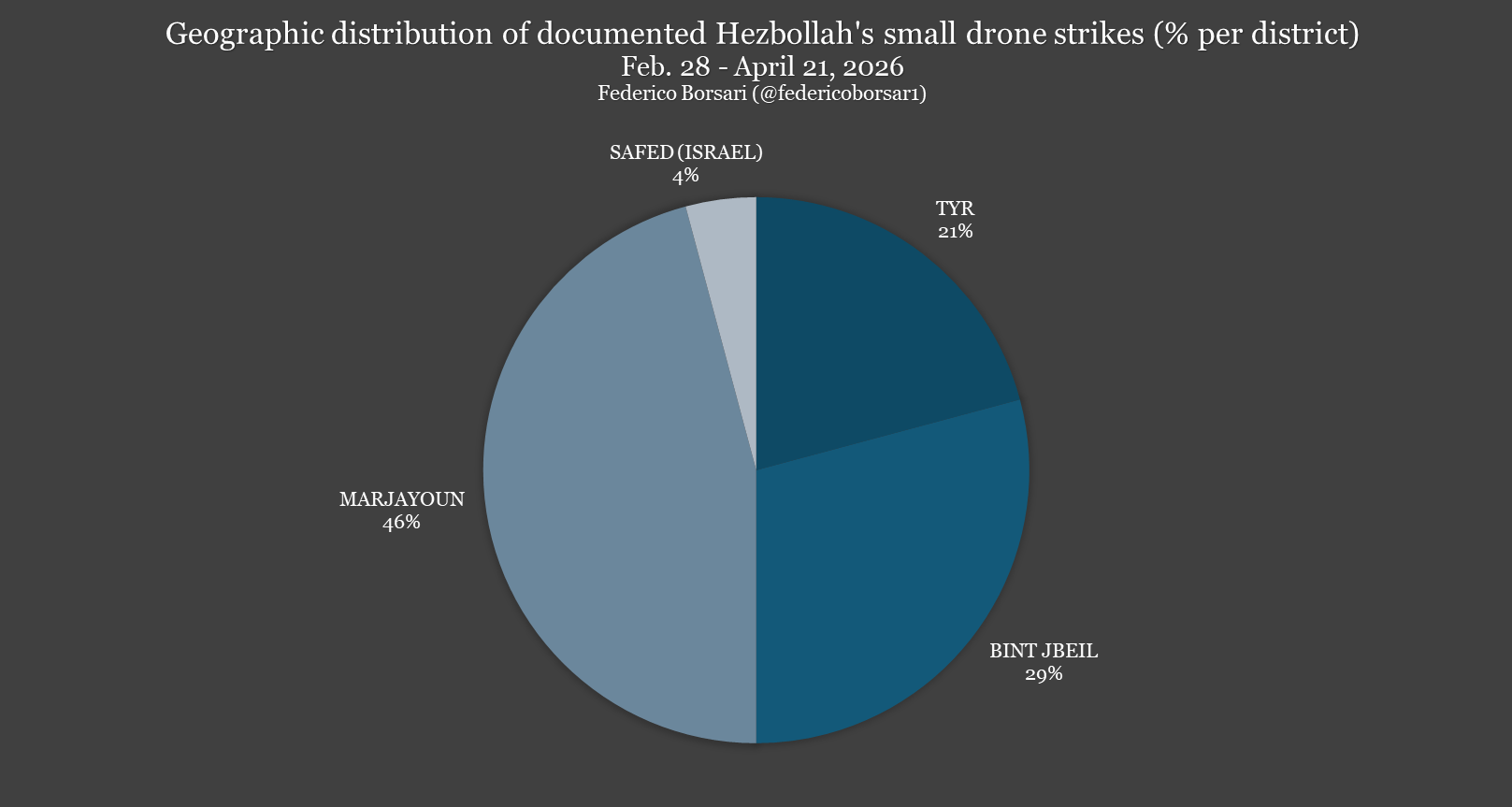
Since February of this year, however, Hezbollah has ramped up FPV drone attacks against Israeli mechanized units that have penetrated into southern Lebanon as part of what Israeli authorities defined as “targeted ground operations” to expand the “forward defense area” and “create an additional layer of security for [Israeli] residents of the north.” This author has geolocated 23 out of 25 FPV drone attacks published by Hezbollah since February 28, as shown in the map below. The strikes are distributed along a fairly regular arch from the southwestern Lebanese coast, near the village of Al-Bayada, to areas along the northeastern border with Israel, in the Marjayoun district.
As Israeli forces push deeper into Lebanese territory south of the Litani River, the likelihood of them becoming more exposed to FPV drone strikes will increase. At the same time, recent reports indicate that Israeli forces are also using FPV drones to hunt Hezbollah’s operatives in the border town of Bint-Jbeil, suggesting a cat-and-mouse game between the two sides.
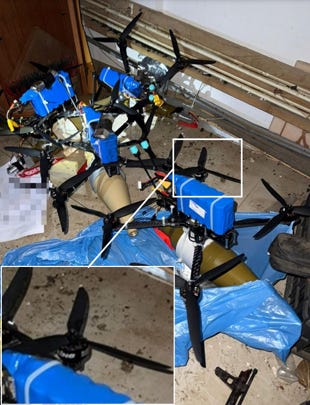
FPV drones provide Hezbollah with a rapidly deployable, cost-effective precision-strike tool for beyond-line-of-sight tactical attacks within the 5-20 km zone, which the group largely lacked previously. Available evidence indicates that these FPV drones are built from off-the-shelf components, with recovered systems equipped with custom 18650 lithium-ion battery packs to extend flight endurance beyond what standard LiPo configurations typically allow. Some of the documented examples feature what appear to be 7/9-inch frames paired with Chinese iFlight XING-family motors, suggesting a focus on balancing payload capacity with maneuverability.
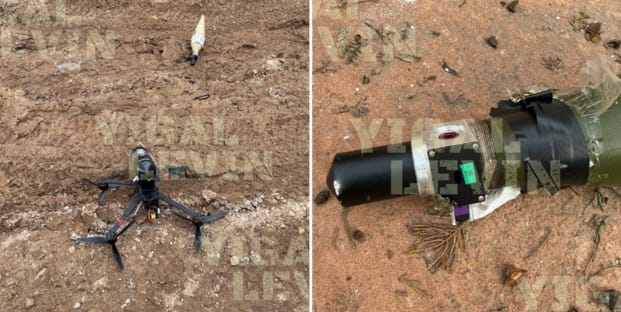
Notably, some FPV drones employed fiber-optic command-and-control links to minimize vulnerability to electronic warfare and signal interception.
These UAVs are frequently equipped with cheap and widely available repurposed PG-7 pattern munitions (or Iranian variants such as the PG7-VL-AT1) and are typically employed in anti-armor and counter-mobility missions against Israeli mechanized units.
Interestingly, the target set remains almost entirely dominated by vehicles, which account for 88% (22 hits) of all FPV strikes. Only two attacks (8%) against buildings hosting Israeli troops near the village of Debel have been documented, and one strike (4%) against Israeli personnel via a munition dropped by a small quadcopter.
Targeted vehicles include Merkava IV main battle tanks (MBT), infantry fighting vehicles (IFV) and armored personnel carriers (APC) such as the Namer, a GRX-8000 high-capacity communication vehicle, light tactical vehicles (LTV), and excavators.
Modus Operandi
An observation of the drone footage released by the group suggests an agile and distributed concept of operations relying on mobile drone crews and pre-positioned munitions stocks and other miscellaneous supplies, in order to cover as much territory as possible. The small size of FPV drones is ideal for this approach, as these systems can be easily concealed and do not entail a large logistic footprint, especially when used in relatively small quantities.
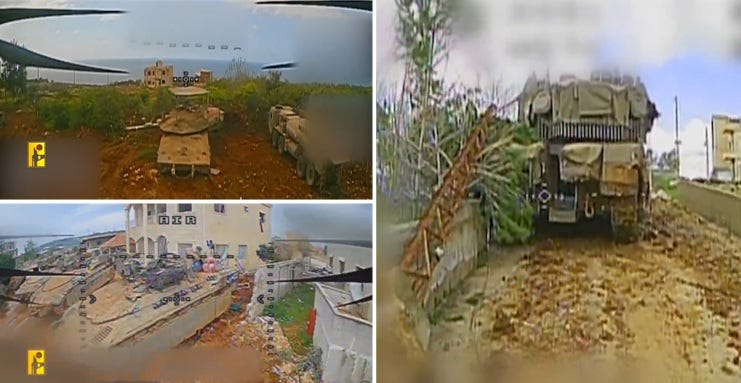
As of the writing of this analysis, documented attacks suggest a low sortie generation capacity among Hezbollah’s ranks, possibly due to a small number of proficient operators. Tactical finesse appears limited, especially when compared to the Ukrainian context, as demonstrated by the suboptimal selection of angle of attacks and target aimpoints, with operators often picking the most accessible area of vehicles rather than the most vulnerable ones, except for a few attacks aimed at weak spots of Israeli vehicles (e.g., rear doors, tracks).
While the extent of damage remains uncertain due to selective video editing and limited post-strike footage, there are some Israeli operational reports of injuries and possible fatalities among Israeli soldiers in armored brigades currently deployed in southern Lebanon, such as the 7th Brigade.
The use of a fiber-optic command and control link allows Hezbollah’s drone crews to overcome Israeli electronic warfare (EW) countermeasures and operate in irregular and more challenging mountainous terrains that would otherwise impose line-of-sight limitations to common radio-controlled FPV drones.
Overall, small FPV UAVs provide Hezbollah with a much-needed tactical precision strike capability and complement its arsenal of anti-tank guided missiles (ATGMs). Compared to the latter, FPV quadcopters offer greater tactical flexibility and can be used to conduct both reconnaissance and strike missions, including against targets of opportunity. As Israeli forces push deeper into southern Lebanon, this combination of FPV drones and ATGMs will likely increase the attrition among their mechanized units and slow down their advances. However, this author assesses that unless Hezbollah manages to scale FPV drone strikes significantly, the latter’s overall operational impact will remain limited.
While advice and training support from Russia cannot be ruled out, it is also plausible that these capabilities are the result of independent development using domestic expertise and widely available tutorials for drone assembly, configuration, and testing. That said, it is worth remembering that Russian forces trained Assad’s regime loyalists in the use of FPV drones between 2023 and 2024, and it is possible that Hezbollah’s operatives benefited from some knowledge transfer, and even that some of the group’s members received the training themselves.
Iraqi Resistance Groups
Pro-Iran resistance groups in Iraq, in particular the Islamic Resistance in Iraq umbrella and Saraya Awliya al-Dam (Companies of the Guardians of Blood), have also started using weaponized FPV drones against US assets and installations near the Iraqi capital, though less frequently compared to the Lebanese Hezbollah.
This author has recorded eight documented FPV drone attacks, with seven geolocated in the Victory Base complex near Baghdad international airport and one allegedly launched against the main headquarter of the Iraqi National Intelligence.
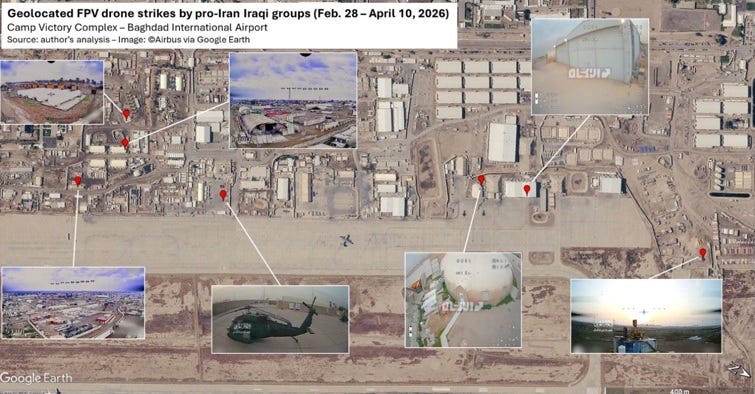
The video feed’s signal quality visible in published footage suggests that most, if not all, of the drones used were fiber-optic types, while the warheads were likely PG-7 pattern munitions (or similar).
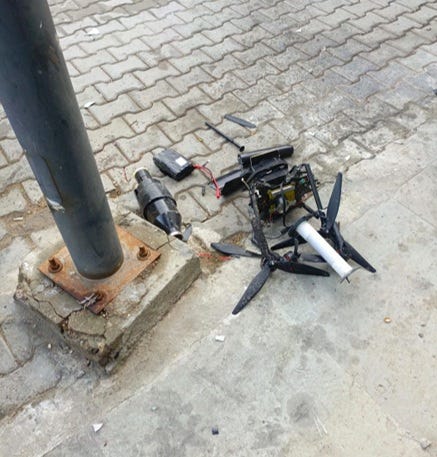
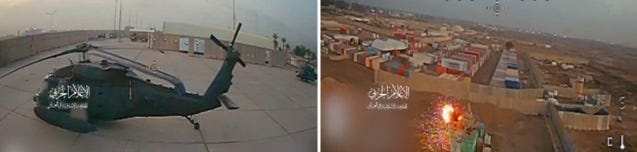
Targets hit include a HH-60M medevac helicopter, one AN/MPQ-64 Sentinel radar, six military shelters and aircraft hangars, and a batch of fuel tanks. The attack launched against the Iraqi National Intelligence on March 21 allegedly consisted of two fiber-optic FPV quadcopters and caused one victim, with one of the drones apparently shot down by security forces (Figure 4).
Overall, observed FPV drone attacks by Iraqi groups indicate basic tactical proficiency, hinting at operators with modest operational experience. In one case, for example, the operators flew the drone back and forth before deciding to strike a reinforced shelter and a hangar, causing little to no damage.
However, in at least one instance, operators deployed two drones simultaneously, with one system providing real-time battle damage assessment (BDA) of the first strike before being flown against another high-value target, thus suggesting a more articulated mission planning as well as sophisticated tactics.
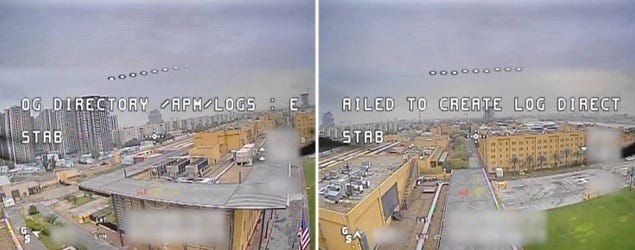
In another case, the Saraya Awliya al-Dam group used a fiber-optic FPV drone to conduct a very low-altitude reconnaissance flight over the US Embassy and diplomatic compound in Baghdad, flying completely unchallenged for several minutes (Figure 6). Such a tactic allows the mapping of potential targets and vulnerable areas for future attacks also in cluttered urban environments and – with fiber-optic drones – it can be countered only via kinetic means, which represent an obvious constraint for the defender in areas with a high risk of collateral damage.
Conclusion
The growing adoption of FPV drones by Hezbollah and pro-Iran Iraqi militias reflects an incremental but notable evolution in their tactical toolkits. These systems offer a relatively low-cost means to conduct precision strikes, expand engagement envelopes, and partially offset adversary advantages in armor and electronic warfare.
However, current evidence points to limited scale, uneven operator proficiency, and modest overall battlefield impact. Furthermore, while systems equipped with fiber-optic command link mitigate EW (electronic warfare) countermeasures and enable operations in contested environments, they do not fundamentally alter the battlefield balance absent a significant increase in deployment rates and tactical refinement.
In Lebanon, and even more so in Iraq, the observed pattern of FPV drones’ operational use suggests a still ongoing learning phase, with basic though gradually improving coordination, targeting, and mission planning. Should Hezbollah and Iranian proxies succeed in scaling production, training, and integration of FPV drones with other capabilities such as ATGMs, mortars, and other fixed wing attack UAVs, these systems will have a more consequential impact in future operations.
 | A guest post by
|