
Islamic State-Linked NYC Explosives Attack Fails
IS attackers likely read DIY manuals, may have had contact with technical experts online, and were probably influenced by the group's calls to target right-wing figures and protests

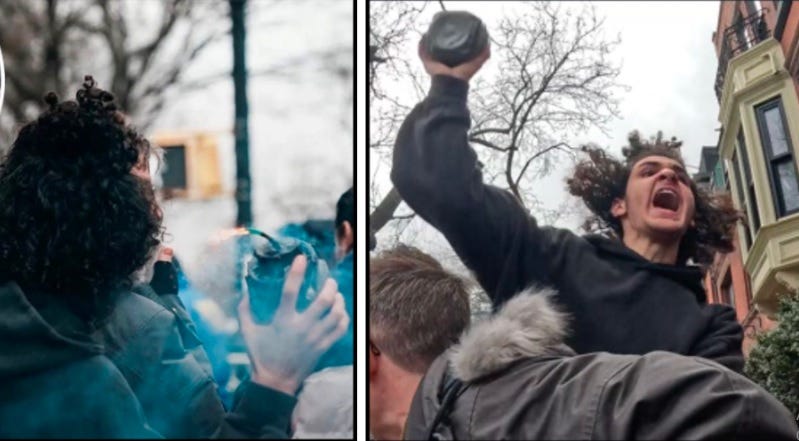
A protest and counter-protest outside the New York City mayoral residence were suddenly disrupted Saturday, March 8, when two young men attempted to light and throw two improvised explosive devices (IEDs). Emir Balat, 18, and Ibrahim Kayumi, 19, were arrested. During and after their arrest, both of them referenced the terrorist group Islamic State (IS) as the inspiration for the plot, with Balat writing a shortened “bayah” to IS on a piece of paper.
Based on videos from the scene and the description of events in the criminal complaint, it appears that the targets were an anti-Muslim march led by white nationalist activist Jake Lang and New York Police Department (NYPD) officers. Whether the officers were the intended target originally or merely targeted in reaction to their spotting Balat is unclear. On video, Balat clearly threw the first IED at the anti-Muslim protest. Balat can be heard shouting “allahu akbar … [unintelligible],” with someone off-camera twice echoing “allahu akbar.” Balat grabs the second device from Kayumi and lights it, subsequently tossing it at a group of NYPD officers after they started chasing him.
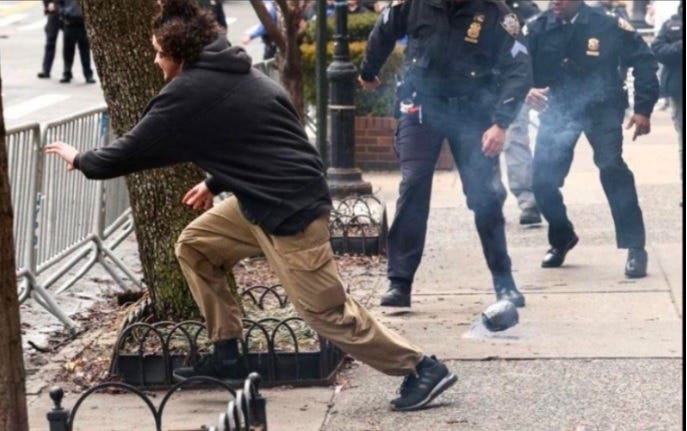
Luckily, both IEDs failed, with one extinguishing upon impact and the second fuse quickly going out. A third device did not contain explosive material, but a storage facility elsewhere held an unspecified amount of additional material. Components for and notes about manufacturing IEDs were found in the suspects’ vehicle. Tests of the explosive material inside at least one of the devices showed that the material was TATP (triacetone triperoxide), the commonly recommended primary explosive of the Islamic State. Its high volatility has attracted doubts from online supporters, with its improper production killing two supporters in Alcanar, Spain, in 2017.

Its successful manufacturing here demonstrates its continued use by global supporters with limited to no expertise in explosives making.
The listed precursor components contained in the pair’s notebook appear to match the recipe for TATP published as part of the pro-Islamic State Al Saqri Foundation for Military Sciences’ “Easy Explosives” article series. This recipe calls for sulfuric acid, in contrast to older Islamic State TATP recipes that still circulate frequently on encrypted social media channels dedicated to this topic. Al Saqri Foundation’s recipe for TATP is not currently shared on its main social media channel, suggesting either Balat and/or Kayumi were in contact with the foundation’s representatives. This likely contact and the pair’s further notes on IED materials suggests Islamic State members might have provided some level of coaching, making this plot more than merely “inspired” by the terrorist group.

 | A guest post by
|